
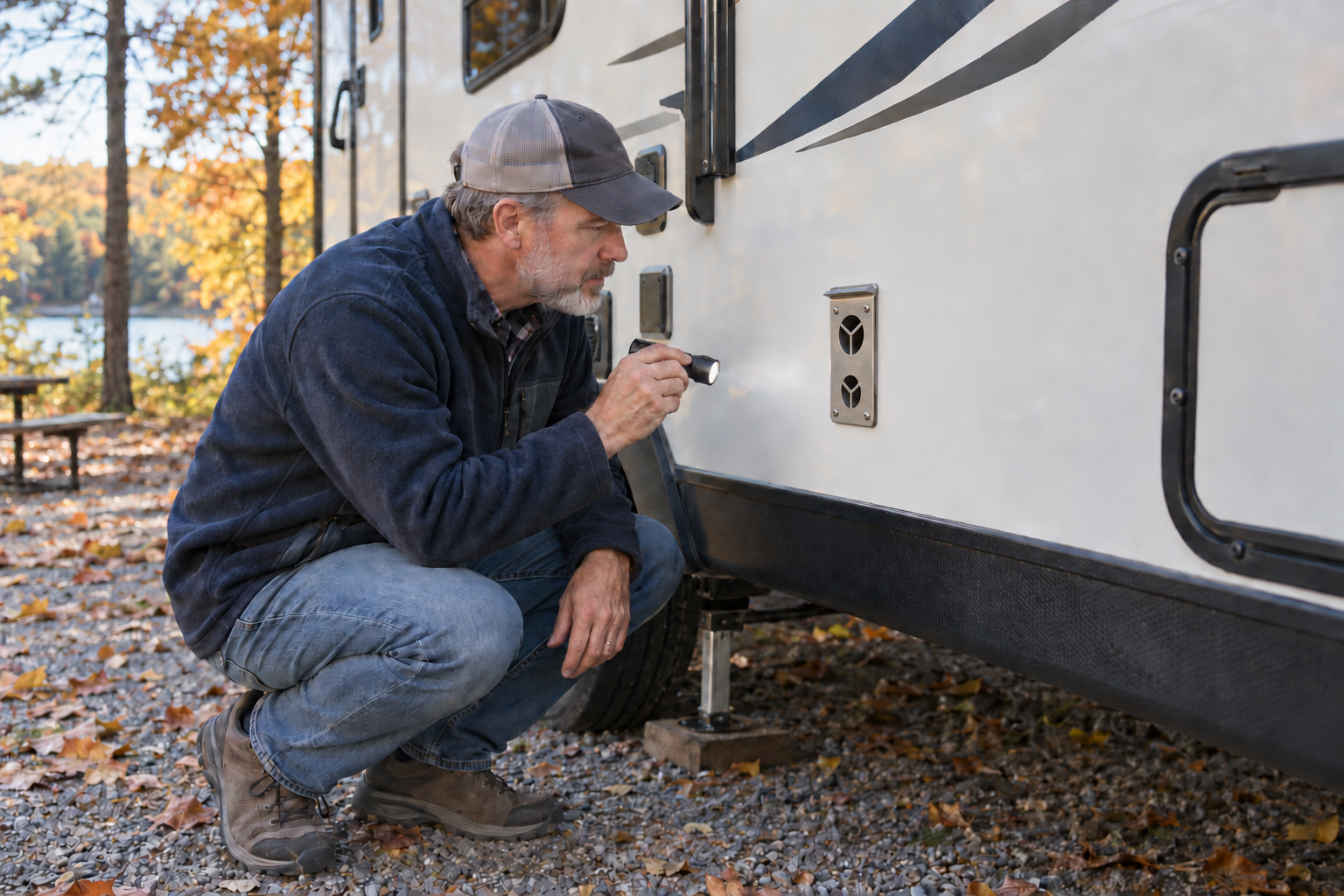
An RV furnace can make cold-weather travel far more comfortable, but it also combines propane combustion, 12-volt electricity, moving air, and safety controls inside a compact appliance. RV furnace maintenance and a basic understanding of how these parts work together can help you recognize common problems and know when to contact a qualified technician.
Most RV furnaces are designed to operate reliably with limited owner maintenance. However, storage, road vibration, dust, insects, low battery voltage, blocked vents, and restricted airflow can interfere with their operation. A furnace should be inspected before the heating season and monitored whenever it is being used.
Always follow the instructions supplied by the furnace and RV manufacturers. Furnace designs vary, and some RVs use diesel-fired, hydronic, electric, or combination heating systems rather than a conventional propane forced-air furnace.
How a Typical RV Furnace Works
Most conventional RV furnaces burn propane to produce heat and use 12-volt electricity to operate the blower, control board, ignition system, and safety devices. Shore power alone does not necessarily guarantee furnace operation. When connected to shore power, the RV’s converter normally supplies 12-volt power and charges the battery, but a problem with the battery, converter, wiring, or fuse can still prevent the furnace from operating correctly.
When the thermostat requests heat, a typical furnace follows a sequence similar to this:
- The thermostat sends a signal to the furnace.
- The blower motor starts and begins moving air.
- A sail switch confirms that the blower is producing sufficient airflow.
- The control board checks the furnace’s safety circuit.
- The propane valve opens and the igniter attempts to light the burner.
- A flame-sensing system confirms that ignition occurred.
- The burner continues operating while the blower circulates heated air.
- When the thermostat reaches its set temperature, the burner shuts off.
- The blower continues briefly to cool the furnace before stopping.
The exact sequence and timing vary by model. Listening to the furnace during normal operation can help you recognize which part of this sequence has failed when a problem develops.
Begin With Basic Safety
A furnace should never be operated if you smell propane, see soot around the exterior vent, hear unusual combustion sounds, or suspect that exhaust gases are entering the RV.
If you smell propane:
- Do not operate electrical switches
- Do not light matches, candles, or other flames
- Extinguish smoking materials
- Shut off the propane supply if it can be done safely
- Move everyone away from the RV
- Contact a qualified propane or RV technician
Do not attempt to locate a suspected leak with a flame. Leak testing and repairs to propane regulators, valves, piping, burners, and appliance gas controls should be performed according to applicable codes and manufacturer procedures.
Every RV equipped with fuel-burning appliances should have functioning carbon-monoxide and propane detectors. Test them according to their manufacturers’ instructions and replace the detectors when they reach their stated end-of-life dates. A detector that sounds repeatedly must not be ignored or disabled. For more industry safety guidance, see the RV Safety & Education Foundation.
Confirm the Propane Supply
If the furnace blower runs but the burner does not ignite, begin with the simple checks that do not require opening or modifying the propane system.
Confirm that:
- The propane cylinders contain fuel
- The cylinder valves are open
- The regulator is not visibly damaged
- The automatic changeover regulator, if equipped, is pointing toward a cylinder containing propane
- Other propane appliances are operating normally
- The furnace has not been locked out after repeated ignition attempts
Open propane-cylinder valves slowly. Opening a valve too quickly can activate an excess-flow device and restrict propane flow. If this happens, turn off the appliances, close the cylinder valve, wait briefly, and then reopen it slowly. Follow the regulator or RV manufacturer’s instructions.
Cold weather can also affect propane performance. Propane vaporizes less effectively as temperatures fall, and the problem becomes more noticeable when cylinders contain less fuel or several appliances are operating at once. Frost on a cylinder or regulator, weak flames at other appliances, or furnace failures during very cold weather may indicate a fuel-supply or regulator problem requiring professional attention.
Never apply an open flame or uncontrolled heat source to a propane cylinder or regulator.
Check the 12-Volt Electrical Supply
Low voltage is one of the most common reasons an RV furnace fails to ignite. The blower may run even when the available voltage is too low for it to reach its proper speed. If the blower does not move enough air, the sail switch may not close and the control board will not allow the propane valve to open.
Possible signs of low voltage include:
- A blower that sounds slower than usual
- Interior lights dimming when the furnace starts
- The blower running without ignition
- Repeated ignition attempts
- Short or inconsistent heating cycles
- The furnace working on shore power but not on battery power
Check the battery’s state of charge and inspect accessible battery terminals for corrosion, looseness, or damaged cables. Confirm that the battery disconnect is in the correct position and that the furnace fuse has not blown.
Replace a blown fuse only with one of the same type and amperage rating. If the replacement fuse blows again, stop troubleshooting. A recurring blown fuse indicates an electrical fault that should be diagnosed by a qualified technician.
Battery voltage alone does not always reveal the battery’s condition. A weak battery may show an acceptable voltage when resting but drop sharply when the blower starts. Proper testing may require measuring voltage under load. For more on 12-volt systems and battery care, see our Understanding RV Electrical Systems guide.
Inspect the Exterior Furnace Vent
The exterior furnace vent allows combustion air to enter and exhaust gases to leave. It must remain clear whenever the furnace is operated.
With the furnace turned off and cool, inspect the vent for:
- Mud-dauber, wasp, or other insect nests
- Spider webs
- Leaves, dirt, or road debris
- Snow or ice
- Signs of nesting rodents
- Rust, corrosion, or physical damage
- Dark soot or discolouration
- Loose or missing vent components
Remove only loose surface debris that can be reached without disassembling the furnace. Do not push tools, wires, compressed air, or cleaning products deep into the vent. Doing so could damage internal components or force debris farther into the appliance.
Vent screens may help deter insects, but they must be specifically approved for the furnace model. An unsuitable screen can restrict airflow, trap debris, or interfere with safe combustion.
Soot around the exhaust opening is not normal. It can indicate incomplete combustion, an obstructed burner, improper gas pressure, or another serious problem. Stop using the furnace and have it inspected professionally.
Keep Interior Airflow Unrestricted
A forced-air furnace depends on unobstructed airflow. The return-air opening allows room air to enter the furnace, while floor or wall registers distribute heated air throughout the RV.
Make sure that bedding, rugs, luggage, pet hair, storage containers, and furniture do not block return-air openings or heat registers. Avoid closing multiple registers unless the furnace or RV manufacturer specifically allows it. Excessive restriction can cause the furnace to overheat and activate its high-temperature limit switch.
Inspect accessible registers and return-air grilles for dust and debris. Clean them with a soft brush or vacuum while the furnace is turned off. If ductwork is visible through a register, look for crushed, disconnected, or damaged ducts, but do not reach into areas where wiring or sharp metal may be present.
Some RVs use furnace ducts to warm the underbelly and protect tanks or plumbing from freezing. Closing registers or altering ductwork can reduce heat to these areas even if the living space still feels warm.
Understanding the Sail Switch
The sail switch is an important safety device that confirms adequate blower airflow before propane is allowed to enter the burner.
If the blower starts but the furnace never attempts ignition, the sail switch may not be closing. Possible causes include:
- Low battery voltage
- A weak or failing blower motor
- Dust, lint, or pet hair around the switch
- Restricted return air
- Blocked or damaged ductwork
- A damaged or misaligned sail switch
- Wiring or control-board problems
On some furnaces, the sail switch is accessible through an exterior service panel. On others, significant disassembly is required. Cleaning or replacing it may look simple, but access procedures vary and nearby components can be damaged easily.
Owners should limit themselves to checking voltage, fuses, vents, registers, and other accessible items unless the manufacturer provides a specific owner-service procedure. Internal diagnosis should be left to a qualified technician.
Furnace Starts but Does Not Ignite
When the blower runs normally but no heat follows, listen carefully to the furnace’s sequence.
You may hear the blower start, followed by a clicking sound from the igniter. If ignition fails, the furnace may repeat the attempt several times before entering lockout. Turning the thermostat off and back on may reset some models, but repeatedly resetting a furnace does not correct the underlying problem.
Possible causes include:
- An empty propane cylinder
- A closed cylinder valve
- Air in the propane line
- Restricted propane flow
- Low 12-volt voltage
- Insufficient blower airflow
- A sail-switch or limit-switch problem
- A dirty burner or ignition assembly
- An electrode or flame-sensing fault
- A propane valve or control-board failure
After a propane cylinder has been changed or the system has been shut off, air may remain in the lines. Operating a cooktop burner briefly, with proper ventilation and according to its instructions, may help confirm that propane has reached the appliances. Never use the cooktop to heat the RV.
If the furnace continues to fail after the basic fuel and electrical checks, professional diagnosis is appropriate.
Furnace Ignites and Then Shuts Off
A furnace that lights but shuts down after only a few seconds may not be confirming the presence of a stable flame. The problem could involve the ignition electrode, flame sensor, burner, propane pressure, grounding, wiring, or control board.
A furnace that runs longer but repeatedly turns off before the RV warms may be cycling on its high-temperature limit switch. Restricted airflow, blocked registers, damaged ducts, excessive dust, or an overheating blower motor may contribute to this condition.
Do not bypass a flame sensor, sail switch, limit switch, or any other safety device. These components prevent propane from flowing or stop combustion when safe operating conditions are not present.
Furnace Runs but Produces Too Little Heat
An RV furnace will not always heat the interior as evenly as a residential system. Large windows, slide-outs, thin walls, air leakage, and very cold outdoor temperatures can create noticeable temperature differences.
If heating performance has changed, check for:
- Blocked or closed heat registers
- An obstructed return-air opening
- Disconnected or crushed ducts
- Weak airflow from one or more registers
- Low battery voltage
- Rapid heat loss around doors, windows, and slide-outs
- Low propane levels
- Thermostat location or calibration problems
Use insulated window coverings and reduce unnecessary air leakage, but never block required appliance vents or ventilation openings. Condensation can become a serious concern in cold weather, so the RV still requires controlled ventilation.
If the furnace runs continuously but cannot maintain temperature under conditions it previously handled, arrange for an inspection.
Unusual Smells and Sounds
A dusty smell can occur briefly when a furnace is first used after storage. Dust on warm surfaces may produce an odour that disappears after a short period. A persistent burning smell, electrical odour, smoke, or eye and throat irritation is not normal.
Turn off the furnace immediately if you notice:
- The smell of propane
- An electrical burning smell
- Visible smoke
- Soot at the exterior vent
- A harsh booming sound during ignition
- Metal scraping or grinding
- A blower that suddenly becomes much louder
- Repeated rapid clicking without ignition
- Strong exhaust odours inside the RV
Squealing, scraping, or grinding may indicate blower-motor or fan-wheel trouble. A delayed boom at ignition can indicate accumulated propane or a burner problem. Both conditions require professional service.
Check the Thermostat
Thermostat problems can sometimes resemble furnace failures. Confirm that the thermostat is set to heat and that the selected temperature is above the current room temperature.
If the thermostat uses replaceable batteries, install fresh batteries of the specified type. Inspect it for loose mounting, visible damage, or heavy dust. Do not spray cleaner directly into the thermostat.
The thermostat’s location can affect heating cycles. Sunlight, a nearby heat register, an open door, or a cold exterior wall may cause it to sense a temperature that does not represent the rest of the RV.
If the furnace will not respond, cycles erratically, or continues running after the set temperature has been reached, the thermostat or furnace controls may require testing.
Inspect the Furnace Before Cold-Weather Travel
Test the furnace well before leaving for a cold-weather trip. Waiting until temperatures fall below freezing can turn a minor repair into an emergency and may expose the plumbing system to damage.
During the test:
- Confirm that the propane and carbon-monoxide detectors operate.
- Check the propane supply.
- Verify that the battery is charged.
- Inspect the exterior furnace vent.
- Clear the return-air opening and heat registers.
- Set the thermostat above room temperature.
- Listen as the furnace completes its startup sequence.
- Confirm that warm air reaches every register.
- Allow the furnace to complete several heating cycles.
- Check for unusual smells, sounds, soot, or repeated shutdowns.
Test the furnace on battery power as well as shore power if you plan to camp without electrical hookups. A system that operates properly while connected may fail when relying on a weak battery. For more on seasonal preparation, see our Seasonal Care guides.
Maintain Safe Clearances
The furnace, return-air opening, ducts, and heat registers need space for airflow and heat dissipation. Do not store combustible products, aerosol cans, paper, clothing, cleaning chemicals, or other heat-sensitive items against the furnace enclosure.
Storage compartments sometimes share walls or floor space with heating equipment. Road vibration can shift stored items into contact with ducts, wiring, or the furnace itself. Secure cargo and inspect these areas regularly.
Never modify the furnace cabinet, ducting, exhaust system, or surrounding structure without approved instructions. Even a small change can affect airflow, combustion, or required clearances.
Heating During Storage and Travel
Do not rely on an unattended furnace as the only protection against freezing during long-term storage. Propane can run out, batteries can discharge, and mechanical problems can stop the furnace without warning.
If the RV will be stored in freezing conditions, properly winterize its plumbing unless the RV and all supporting systems will be continuously monitored and maintained.
Whether a propane furnace may be operated while travelling depends on the RV, appliance instructions, local laws, and conditions. Propane appliances must be shut off where required, including at certain fuel stations, tunnels, ferries, enclosed areas, and other restricted locations. Follow all posted rules and manufacturer instructions.
RV Furnace Maintenance: Suggested Schedule.
Before every cold-weather trip:
- Check propane levels
- Confirm the battery is charged
- Test the propane and carbon-monoxide detectors
- Inspect the exterior vent
- Clear the return-air opening and registers
- Test the furnace through a complete cycle
Monthly during frequent use:
- Vacuum accessible return-air grilles and registers
- Inspect visible ducts
- Check for unusual sounds or odours
- Examine the exterior vent for debris, soot, and damage
- Review battery condition and charging performance
At least annually:
- Perform a thorough visual inspection
- Confirm that all safety detectors remain within their service lives
- Have the propane system checked as required by the manufacturer or local regulations
- Arrange professional furnace service if performance has changed or the appliance has not been inspected for an extended period
The furnace manufacturer’s schedule takes priority over general recommendations.
When to Contact a Qualified Technician
Stop using the furnace and obtain professional assistance if:
- You smell propane
- A propane or carbon-monoxide detector sounds
- Soot appears around the exhaust
- The burner ignites with a boom
- Exhaust odours enter the RV
- Wiring becomes hot or discoloured
- A fuse repeatedly blows
- The furnace repeatedly locks out
- The burner lights and immediately goes out
- The furnace overheats or cycles rapidly
- The blower grinds, scrapes, or fails to reach normal speed
- The exterior vent or furnace casing is damaged
- The problem involves propane pressure, valves, burners, ignition components, or safety controls
Propane, combustion, and internal electrical repairs require appropriate training and testing equipment. A technician should verify that the furnace lights correctly, burns cleanly, vents safely, and responds properly to every safety control. For help identifying specific problems, see our RV Troubleshooting guides.
RV Furnace Maintenance Checklist
Use this quick checklist before the heating season:
- Test the carbon-monoxide detector
- Test the propane detector
- Confirm detector replacement dates
- Check propane levels
- Inspect the battery and terminals
- Confirm the battery charges properly
- Check the furnace fuse
- Inspect the exterior intake and exhaust
- Look for insects, debris, corrosion, and soot
- Clear interior return-air openings
- Open and inspect heat registers
- Check accessible ductwork
- Test the thermostat
- Run the furnace through several complete cycles
- Listen for abnormal sounds
- Check for unusual odours
- Confirm warm airflow at every register
- Record the inspection in the maintenance log
For a printable version of the maintenance schedule, see our RV Checklists page.
RV Furnace Maintenance: Key Takeaways
RV furnace maintenance begins with clean airflow, adequate battery power, a dependable propane supply, and functioning safety detectors. Many common problems can be traced to a weak battery, obstructed vent, blocked register, or depleted propane cylinder.
Owners can safely perform basic visual inspections and simple checks, but internal furnace and propane repairs should be left to qualified professionals. Never bypass a safety device or repeatedly reset a furnace that will not operate correctly.
Testing the furnace before cold weather arrives gives you time to correct problems while conditions are still manageable. With regular inspection and sensible maintenance, your furnace can provide dependable heat without becoming an unexpected problem in the middle of a trip.