
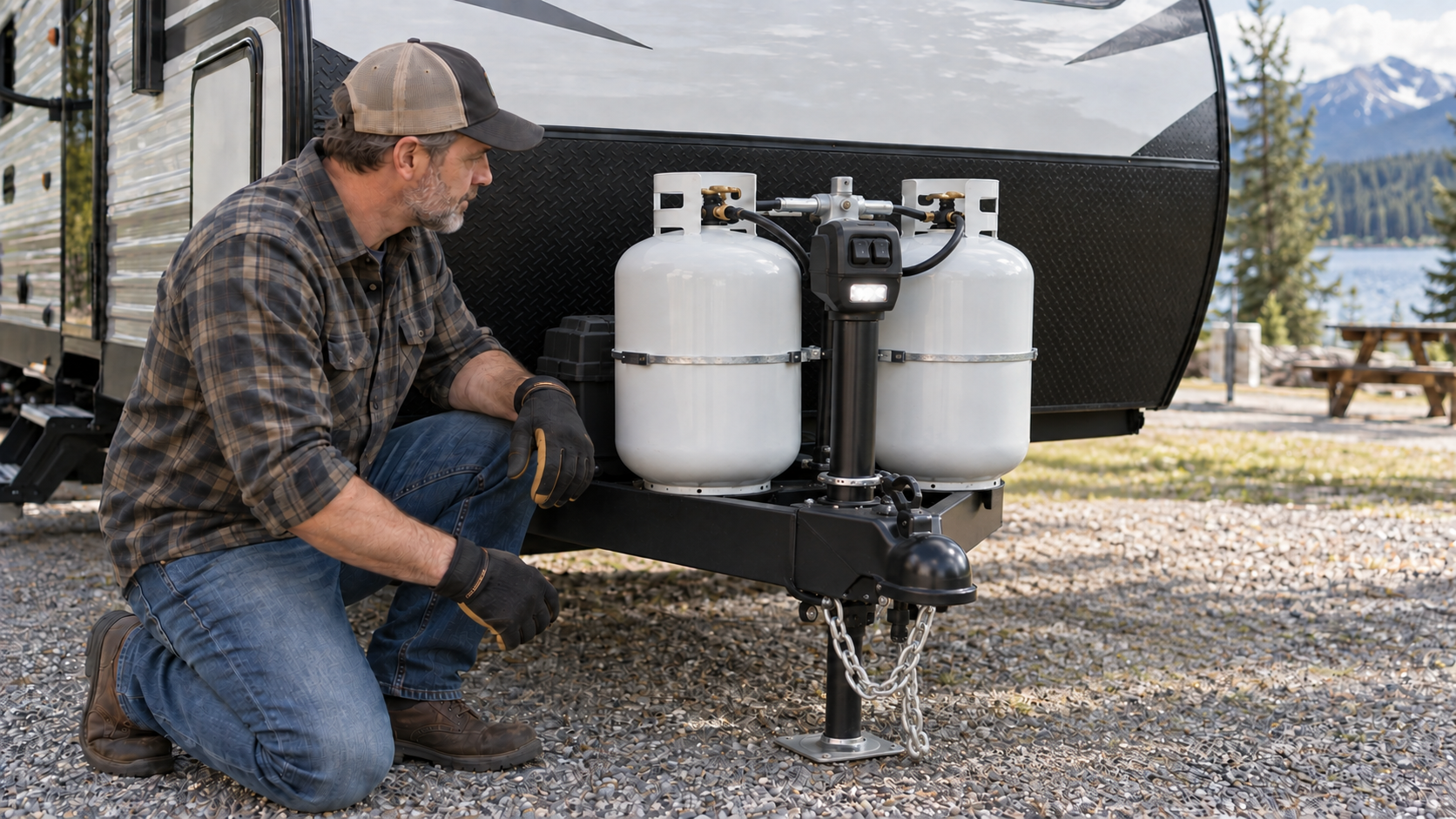
Propane can run the RV cooktop, furnace, water heater, and some refrigerators when campsite electricity is limited. This RV propane safety guide focuses on using those appliances safely, recognizing combustion trouble, responding to a propane alarm, and knowing when to stop and call for help.
For cylinder condition, mounting, hoses, regulators, and maintenance of the fuel supply itself, see RV Propane System Safety and Maintenance. Do not treat appliance troubleshooting as permission to adjust gas fittings or bypass safety devices.
The safest owner-level routine is to check the detectors and vents, follow each appliance manual, and shut down equipment when warning signs appear.
RV Propane Safety: Before Using an Appliance
Identify the appliance and follow its manufacturer’s instructions. Make sure its accessible intake and exhaust openings are clear, test the required propane and carbon-monoxide detectors, and look for soot, damage, or an unusual odour. Confirm that propane is available without opening a gas fitting or adjusting a regulator.
Many propane appliances also need 12-volt power for their controls. If several appliances fail, check the available battery power and note any fault codes. For cylinders, mounting, hoses, regulator inspection, and gas-system maintenance, see RV Propane System Safety and Maintenance. Leave leak testing, pressure adjustment, and repairs to a qualified professional.
Recognizing the Smell of Propane
Propane is naturally odourless, but an odorant is added so a leak can be detected. It is commonly described as smelling like rotten eggs, sulphur, or skunk spray.
Some people may have difficulty detecting the smell. Illness, age, smoking, medication, alcohol, fatigue, competing odours, or a reduced sense of smell can make propane harder to notice. Under certain conditions, the odorant can also become less noticeable.
A working propane detector provides an important additional warning, but it does not replace proper maintenance or careful observation. Because the odorant can fade over time, routine detector testing is essential.
What to Do If You Smell Propane
Treat any suspected propane leak seriously.
If you smell propane or a propane alarm activates:
- Do not light a flame
- Do not smoke
- Do not operate electrical switches
- Do not connect or disconnect electrical equipment
- Do not use anything that could create a spark
- Extinguish open flames only if this can be done safely
- Get everyone out of the RV
- Move away from the affected area
- Shut off the propane supply only if it can be reached safely
- Contact emergency services or a qualified propane professional as appropriate
Do not return to the RV or restore the propane supply until a qualified professional has identified the source, made the area safe, and completed any required repairs.
Never search for a propane leak with a match, lighter, torch, or other flame.
Propane-Leak Detectors
Most RVs equipped with propane appliances have a propane-leak detector mounted low on an interior wall. Propane vapour is heavier than air and may collect near floor level, which is why the detector’s location matters.
Test the detector according to its manufacturer’s instructions. Confirm that:
- It receives continuous power
- Its indicator shows normal operation
- Openings are clean and unobstructed
- Furniture, bags, or bedding do not cover it
- It has not reached the end of its service life
- It has not been painted or damaged
Many RV propane detectors are powered by the 12-volt battery system. Turning off the battery disconnect or allowing the battery to discharge may disable the detector.
Do not disconnect a detector because it alarms repeatedly. A recurring alarm could indicate a propane leak, low voltage, contamination, or a failing detector. Determine the cause before using the RV.
Detectors have limited service lives. Replace them at the interval specified by the manufacturer, even if they still appear to operate.
Carbon-Monoxide Safety
Carbon monoxide forms when fuel does not burn completely. Unlike propane odorant, carbon monoxide has no colour, taste, or smell.
Possible symptoms of carbon-monoxide exposure include:
- Headache
- Dizziness
- Weakness
- Nausea
- Confusion
- Unusual tiredness
- Chest discomfort
- Loss of consciousness
These symptoms can resemble the flu or other illnesses. If a carbon-monoxide alarm activates or occupants develop possible symptoms, move everyone into fresh air immediately and contact emergency services. Do not re-enter the RV until it has been declared safe.
Test the carbon-monoxide alarm regularly and replace it according to its manufacturer’s instructions. Never remove its batteries or disconnect it to silence an alarm. For more industry safety information, see the RV Safety & Education Foundation.
Appliance Ventilation and Combustion Air
Propane appliances require an adequate supply of combustion air and a clear path for exhaust gases. Exterior vents must remain open and unobstructed.
Inspect appliance vents for:
- Insect nests
- Spider webs
- Leaves
- Mud
- Snow or ice
- Soot
- Rust
- Damaged screens
- Bent vent covers
- Items stored against the openings
Do not modify a vent or cover it to stop drafts. Do not install insect screens unless they are approved for that appliance. A screen with openings that are too small can restrict airflow and affect combustion.
If soot appears around a vent, stop using the appliance and arrange professional service. In fact, it may indicate incomplete combustion, restricted airflow, burner contamination, or another problem requiring professional service.
Safe Use of the RV Cooktop and Oven
Use the cooktop and oven only for cooking, and follow their operating instructions.
Never use a propane cooktop or oven to heat the RV. Doing so can create a serious carbon-monoxide hazard, consume oxygen, produce excessive moisture, and increase the risk of fire.
When cooking:
- Provide the ventilation required by the manufacturer
- Keep combustible materials away from burners
- Keep pot handles from extending over the aisle
- Do not leave operating burners unattended
- Confirm that burner flames appear normal
- Turn controls fully off after use
- Keep children and pets away from hot surfaces
- Never store items inside the oven without checking before ignition
A normal burner flame is generally steady and mostly blue, although appearance varies by appliance and operating conditions. Persistent yellow flames, soot, delayed ignition, unusual noise, or flames lifting away from the burner require attention. Even if the flame looks normal, never leave a burner unattended.
Furnace Safety
An RV furnace normally burns propane while using 12-volt electricity for its controls and blower motor.
Keep interior and exterior furnace openings clear. Do not place rugs, furniture, luggage, or other items over return-air grilles or heat registers. Keep combustible materials away from the furnace and duct outlets.
Have the furnace inspected if you notice:
- A strong propane smell
- Soot near the exterior vent
- Repeated ignition attempts
- Delayed ignition
- Unusual rumbling or popping
- Overheating
- Frequent shutdowns
- A damaged exterior vent
- A carbon-monoxide alarm
- An unfamiliar exhaust smell inside the RV
Furnace burner, gas-valve, heat-exchanger, and pressure testing should be left to a qualified technician. If the furnace shuts down repeatedly, have it inspected before the next trip. For routine RV maintenance guidance, see our RV Maintenance guides.
Water-Heater Safety
Before operating the water heater, confirm that its tank is full unless it is a tankless model. Energizing an empty conventional water heater can damage an electric heating element.
Keep the exterior water-heater compartment clean and unobstructed. Do not store hoses, cleaning products, or other materials inside it.
Stop using the water heater and obtain service if you notice:
- Soot around the access door or exhaust
- A damaged burner assembly
- Delayed or forceful ignition
- Unusual flames
- Propane odour
- Repeated ignition failure
- Water leaking onto gas or electrical components
- Scorched wiring or insulation
Allow the water heater to cool and release system pressure before performing approved draining or flushing procedures. Since water heaters can fail without warning, check the exterior compartment before each trip.
Refrigerator Safety
Some RV refrigerators can operate on propane. These appliances require unobstructed exterior ventilation and correct installation.
Keep the lower and upper refrigerator vents free of nests, leaves, dirt, and stored objects. Do not use the exterior refrigerator compartment as a storage space.
When parked, follow the manufacturer’s levelling requirements. Operating certain absorption refrigerators too far out of level can affect circulation and may damage the cooling unit.
Follow all manufacturer instructions and applicable rules regarding refrigerator operation while travelling, refuelling, entering tunnels, using ferries, or parking in enclosed areas. Requirements can vary by appliance and location.
Have the refrigerator inspected if you notice soot, unusual odours, repeated ignition failure, poor cooling, yellow residue, damaged burner components, or signs of overheating. Although propane refrigerators are common, they require unobstructed ventilation and proper levelling.
Refilling Propane Containers
Propane containers should be filled only by trained and authorized personnel.
Before filling, the attendant may inspect the container’s condition, certification date, valve, and identification markings. A container that is damaged, expired, or otherwise unacceptable may be refused.
Tell the attendant about any suspected problem. Do not ask someone to fill a leaking, damaged, or questionable cylinder.
After filling, make sure the cylinder is secured correctly before leaving. However, if propane can be smelled after installation, do not operate the system until the cause has been identified.
Travelling With Propane
Rules governing RV propane safety during travel can vary by province, state, tunnel, bridge, ferry, fuel station, and facility. RV and appliance manufacturers may also specify when propane must be turned off.
Before travelling:
- Learn the requirements along your route
- Follow posted restrictions
- Secure cylinders and protective covers
- Inspect hoses and mounting hardware
- Confirm that appliances are set as required
- Close propane valves wherever required
- Never operate propane equipment in a prohibited or enclosed area
Do not assume that a practice permitted in one location is acceptable everywhere. Because rules vary by region, check local requirements before travelling.
When to Contact a Qualified Technician
Contact a qualified RV or propane technician if:
- You smell propane
- A leak is suspected
- A propane alarm activates without an obvious harmless cause
- The regulator is damaged, contaminated, or incorrectly positioned
- A hose or fitting is cracked, corroded, or leaking
- An appliance produces soot
- A burner flame appears abnormal
- Ignition is delayed or forceful
- Multiple propane appliances stop working
- A valve is difficult to operate
- Propane piping has been damaged
- The RV has been involved in a collision
- An appliance vent or combustion chamber is damaged
- Carbon monoxide is suspected
- The system requires pressure or leak testing
Propane pressure testing, regulator adjustment, piping repairs, valve replacement, and appliance gas-control repairs require the proper training and equipment. For help identifying specific issues, see our RV Troubleshooting guides. If you are unsure whether a repair is safe, do not attempt it yourself.
Routine Propane-Safety Checklist
Before each trip or after storage:
- Inspect cylinders or the mounted tank for visible damage
- Confirm that containers are properly secured
- Check the condition of accessible hoses
- Look for corrosion or damaged fittings
- Confirm that the regulator is mounted correctly
- Keep the regulator vent clear
- Inspect exterior appliance vents
- Test propane and carbon-monoxide detectors
- Check detector replacement dates
- Confirm that a suitable fire extinguisher is accessible
- Remove combustible materials from appliance areas
- Review propane restrictions along the planned route
At the campsite:
- Keep appliance vents unobstructed
- Watch for soot, unusual flames, or ignition problems
- Pay attention to propane odours and detector alarms
- Keep combustible materials away from operating appliances
- Never use cooking appliances for space heating
- Shut down any appliance that behaves abnormally
For a printable version of the maintenance checklist, see our RV Checklists page.
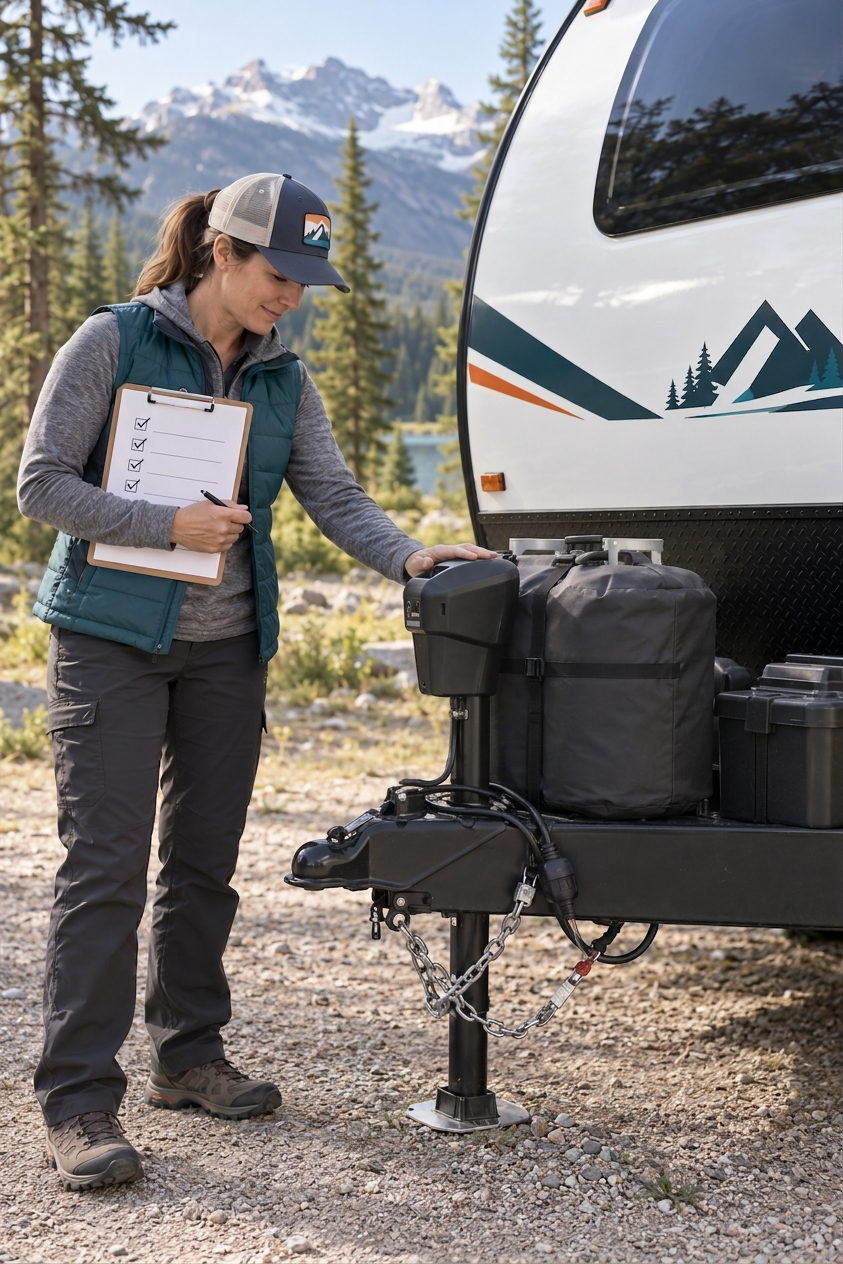
RV Propane Safety: Key Takeaways.
Propane makes an RV comfortable and versatile, but the system depends on proper installation, ventilation, secure containers, working detectors, and responsible operation.
Owners can perform valuable visual inspections, keep vents clear, test alarms, and watch for changes in appliance performance. Repairs, adjustments, leak testing, and work involving gas controls or piping should be completed by qualified professionals.
Never ignore a propane smell, soot, unusual flames, repeated ignition problems, or a safety alarm. Stop using the affected equipment, move to a safe location when necessary, and have the system inspected before returning it to service.
A few minutes of careful observation before a trip can identify developing problems and help keep everyone in and around the RV safer.