
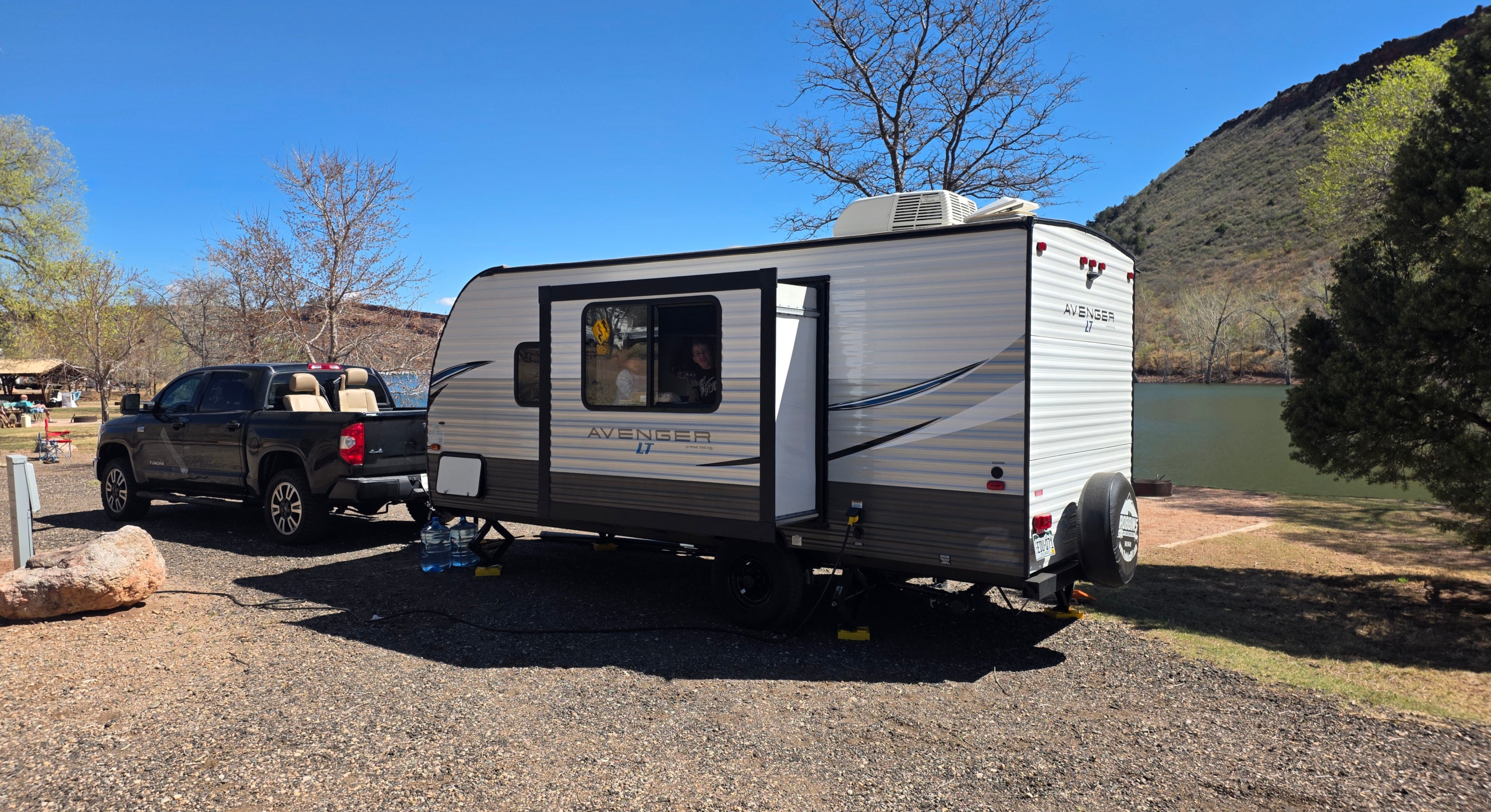
Choosing your first RV can feel overwhelming. Class A, Class B, Class C, travel trailers, fifth wheels, toy haulers, camper vans, pop-ups — the categories are numerous, the specifications are technical, and the sales environment can be intense.
A useful approach is to slow down. Rather than starting with the RV, start with how you plan to use it. The right RV for weekend trips to a nearby lake is often the wrong RV for full-time travel, and the RV that suits one couple may be unsafe or impractical for a family of five.
This guide explains the main RV types, the practical questions to ask before shopping, and how to inspect a candidate RV before committing. It is not a substitute for professional inspection or for reading the manuals of the specific RV you consider.
Start With How You Will Use the RV
Before comparing models, answer these questions honestly.
How often will you use it?
A few weekends per season, a month-long trip each year, or full-time travel each require different compromises. An RV used twice a year may not justify the cost, weight, or complexity of a larger rig.
How far will you travel?
Short trips to familiar campgrounds are less demanding than long-distance travel through mountains, remote areas, or different climates.
Where will you stay?
Full-hookup campgrounds, partial-hookup sites, provincial or state parks, boondocking locations, and private driveways each place different demands on tank capacity, battery power, and self-sufficiency.
How many people will travel?
Sleeping capacity, seat-belt positions, bathroom arrangements, and storage must match the actual number of occupants — not the brochure’s maximum.
Will you tow a vehicle, or drive the RV everywhere?
A motorhome may need a towed vehicle for local travel. A trailer requires a capable tow vehicle. Both choices affect cost, weight, and complexity.
What is your realistic budget — for purchase and ongoing costs?
Purchase price is only part of the picture. Insurance, fuel, storage, maintenance, tires, and repairs add up. A used RV that is affordable to buy may not be affordable to maintain.
What is your experience and comfort level?
Towing a large trailer, driving a motorhome, and managing RV systems each require different skills. Choose an RV you can operate safely.
Write down your answers. They will guide the rest of the decision.
Understand the Main RV Types
Each RV type makes different trade-offs. None is universally best.
Travel Trailers
Travel trailers are towed behind a separate vehicle and unhitched at the campsite. They range from small single-axle units to large multi-slide models.
Advantages:
- The tow vehicle can be used for local travel once the trailer is parked
- Wide range of sizes, layouts, and prices
- Often lower cost than a comparable motorhome
- Easier to store than a large motorhome
Considerations:
- Requires a properly rated tow vehicle
- Towing, hitching, and backing require practice
- Payload, tongue weight, and hitch setup must be correct
- The trailer cannot be occupied while travelling in most jurisdictions
Fifth-Wheel Trailers
Fifth wheels are towed by a pickup truck using a hitch mounted in the truck bed. The connection is more stable than a conventional trailer.
Advantages:
- Excellent towing stability
- Often more living space than a similar-length travel trailer
- Higher ceilings in many models
- The truck can be used for local travel
Considerations:
- Requires an appropriate truck and hitch
- Pin weight consumes truck payload
- Cab and bed-rail clearance must be verified
- Towing requires practice and attention to turning clearance
Class A Motorhomes
Class A motorhomes are built on a bus-style chassis. They are the largest motorhome type.
Advantages:
- Large living space and storage
- Driver and passengers can move around while parked
- Often available with powerful chassis and levelling systems
- Good for extended travel and full-time living
Considerations:
- Expensive to purchase, fuel, insure, and maintain
- Large size limits campsite and route options
- Chassis and living systems require maintenance
- A towed vehicle is often needed for local travel
Class B Motorhomes
Class B motorhomes are van-based conversions. They are the smallest motorhome type.
Advantages:
- Easy to drive and park
- Good fuel economy relative to larger motorhomes
- Can often be used as a second vehicle
- Fits in many standard parking spaces
Considerations:
- Limited interior space and storage
- Small tanks and battery capacity
- Often expensive relative to size
- Best suited to one or two travellers
Class C Motorhomes
Class C motorhomes are built on a van or truck chassis with a distinctive cab-over section.
Advantages:
- More space than a Class B
- Easier to drive than a Class A
- Often the cab-over provides additional sleeping space
- Wide range of sizes and prices
Considerations:
- Towing and parking are still significant
- Payload and weight ratings must be respected
- Some layouts limit bathroom or storage space
Truck Campers, Pop-Ups, and Toy Haulers
Truck campers sit in the bed of a pickup truck. Pop-ups are lightweight folding trailers. Toy haulers provide a garage area for motorcycles, ATVs, or other equipment.
Each serves a specific purpose. Choose based on your actual travel needs, not on a single feature.
Match the RV to Your Tow Vehicle or Chassis
If you choose a towable RV, the tow vehicle must be properly rated for the loaded trailer. The advertised towing capacity of a truck is not the only limit — payload, rear-axle rating, hitch rating, and combined weight rating all apply.
Key ratings to check:
- Gross Vehicle Weight Rating (GVWR) — the maximum permitted weight of the loaded vehicle
- Gross Axle Weight Rating (GAWR) — the maximum permitted load on each axle
- Gross Combined Weight Rating (GCWR) — the maximum combined weight of the tow vehicle and loaded trailer
- Payload capacity — the weight available for passengers, cargo, hitch equipment, and tongue or pin weight
- Towing capacity — the maximum trailer weight the vehicle may be rated to tow under specified conditions
The trailer’s loaded weight — with water, propane, batteries, food, and gear — is what matters. Published dry weights are usually optimistic.
Never rely on the tow rating alone. Payload or rear-axle capacity is often the limiting factor.
For motorhomes, verify the chassis ratings, tire load capacities, and actual loaded weight. A motorhome loaded for travel can easily exceed its axle ratings even when it is below the gross vehicle weight rating.
If you are unsure whether a specific combination is safe, have the weights verified at a certified scale before purchase. For more on weight ratings and safe loading, see our RV Weight, Loading and Towing Safety guide.
Consider Layout and Livability
The floor plan matters more than the brand name for most owners.
Ask:
- Can you stand, sit, cook, and sleep comfortably?
- Is the bathroom accessible without disturbing other occupants?
- Is there enough storage for clothing, food, tools, and outdoor gear?
- Are the sleeping surfaces comfortable for the actual occupants?
- Can you use the kitchen and bathroom while the slides are retracted?
- Is there adequate ventilation and airflow?
- Does the layout work in poor weather, when occupants stay inside?
Spend time inside a similar model at a dealership or RV show. Sit on the seating, lie on the bed, and simulate using the kitchen and bathroom. Small inconveniences become significant over time.
Check Construction and Condition
For new RVs, pay attention to build quality, materials, and the reputation of the manufacturer for warranty support.
For used RVs, condition matters more than age. A well-maintained older RV is often a better purchase than a neglected newer one.
Key areas to inspect:
- Roof and exterior sealant
- Water intrusion evidence inside cabinets, under mattresses, and along walls
- Flooring for soft or swollen areas
- Appliance operation
- Electrical systems, batteries, and converter
- Plumbing, water pump, and water heater
- Propane system and appliance vents
- Tires, including date codes
- Suspension and running gear
- Slide-outs and awnings
- Safety detectors and fire extinguisher
Any of these can be expensive to repair. A professional pre-purchase inspection is often worth the cost, especially for a used RV. For more on what to look for, see our RV Roof and Exterior Seal Inspection guide and RV Tire Safety post.
Understand Tank Capacities
Fresh-water, grey-water, and black-water tank capacities determine how long you can stay without hookups.
Consider:
- How much fresh water you need per day
- How much waste you will produce
- Whether your typical campsites have hookups
- Whether you plan to use the shower and toilet in the RV
- Whether there is room for a portable waste tank or extra water containers
A trailer with small tanks may be fine for weekend trips to full-hookup campgrounds, but inconvenient for extended off-grid travel.
Plan for Power and Propane
Your RV’s electrical and propane systems determine what you can run and how long you can stay.
Check:
- Battery capacity and condition
- Converter and inverter capabilities
- Solar provisions
- Generator, if equipped
- Propane tank size
- Appliance types and consumption
A larger RV with a residential refrigerator, air conditioners, and electric water heater will demand more power than a smaller RV with propane appliances.
Account for Storage and Insurance
Where will the RV be stored when not in use? Options include:
- A private driveway
- A covered or enclosed storage facility
- An outdoor storage lot
- A seasonal campsite
Cost, access, security, and local regulations vary. Some communities restrict RV storage on residential property.
Insurance for an RV differs from vehicle insurance. Coverage may include the vehicle, the living area, personal belongings, and liability. Review the policy carefully — especially for full-time use.
Avoid First-Time Buyer Mistakes
Common mistakes include:
- Buying more RV than the tow vehicle can safely handle
- Underestimating payload limits
- Ignoring actual loaded weight
- Choosing a floor plan based on appearance rather than use
- Skipping a professional inspection
- Overlooking ongoing costs such as tires, storage, and maintenance
- Buying based on a single trip’s needs rather than a longer pattern
- Trusting the sales environment more than your own research
The right approach is methodical, not emotional. For more industry guidance on RV construction and safety standards, see the RV Industry Association.
Choosing Your First RV: Checklist
Before committing to a purchase, confirm:
- The RV type matches your travel style and frequency.
- The tow vehicle or chassis is properly rated for the loaded RV.
- Payload, axle, and combined weight limits are respected.
- The floor plan supports actual use, not just showroom appeal.
- Tank capacities match your camping style.
- Electrical and propane systems meet your needs.
- The RV has been professionally inspected.
- Storage, insurance, and ongoing costs are understood.
- The seller provides clear documentation, titles, and manuals.
- You are prepared for maintenance and repairs.
Choosing Your First RV: Key Takeaways
Choosing your first RV is less about finding the perfect model and more about matching the RV to your real needs. Start with how you will travel, then narrow the field by type, weight, and layout. Inspect carefully, weigh honestly, and expect to learn as you go.
A modest, well-maintained RV that fits your budget and tow vehicle will usually serve you better than a larger one you cannot safely operate or maintain. The goal is not the biggest RV — it is the RV you can use confidently, maintain properly, and enjoy for years. For help keeping your new RV in good condition, see our RV Maintenance Schedule and Recordkeeping guide.