
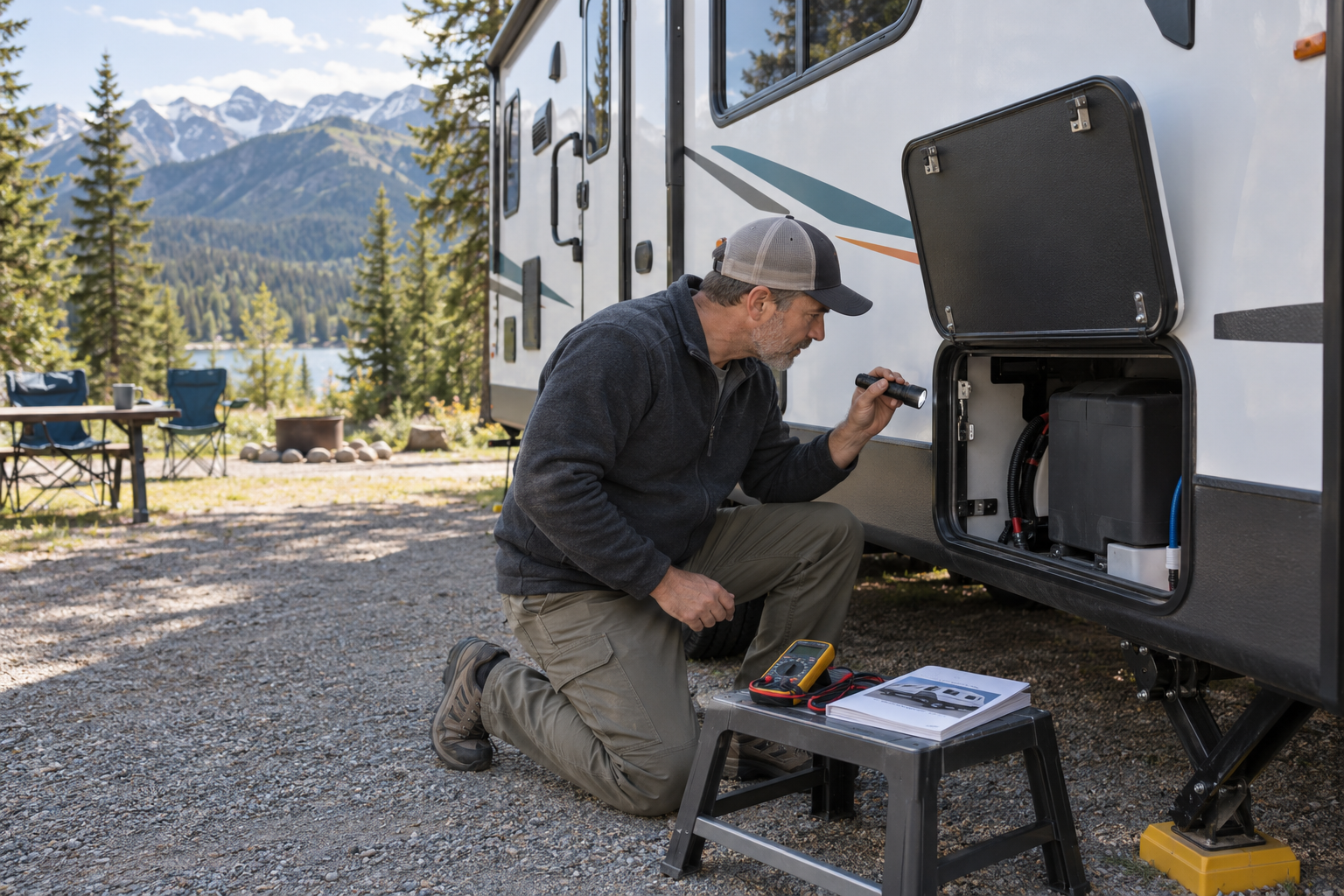
An RV generator provides electricity when shore power is unavailable, allowing you to charge batteries and operate appliances while travelling, dry camping, or dealing with a power outage. RV generator maintenance helps keep it reliable. Like any small engine, however, a generator can become unreliable when it sits unused, receives irregular service, or operates under unsuitable conditions.
Generator designs vary considerably. Some motorhomes and larger trailers have permanently installed gasoline, diesel, or propane generators. Other RV owners rely on portable generators. Always identify your exact generator and follow its owner’s manual for operating, maintenance, ventilation, grounding, and storage requirements.
Internal fuel-system, electrical, exhaust, and control-board repairs should be completed by a qualified generator or RV technician.
Identify Your Generator
Before performing maintenance, record the generator’s:
- Manufacturer
- Model number
- Serial number
- Fuel type
- Rated output
- Oil type and capacity
- Filter and spark-plug numbers
- Maintenance intervals
- Starting and shutdown procedures
The identification label may be inside the generator compartment, behind an access panel, or on the generator frame. Photograph the label and keep a copy of the manual with your RV records.
Do not assume two similar-looking generators use the same oil, filters, spark plugs, or maintenance schedule.
Understand the Difference Between Built-In and Portable Generators
A built-in RV generator is permanently installed in a compartment designed for that specific unit. Its exhaust, cooling airflow, fuel supply, electrical output, and remote controls are integrated into the RV.
A portable generator must be operated outside according to its manufacturer’s instructions. Never operate a portable generator inside an RV storage compartment, enclosed trailer, vehicle, tent, garage, or other enclosed or partly enclosed area.
Do not place a portable generator beneath an RV, under an awning, beside an open window, or where exhaust could enter the RV or a neighbouring campsite. Consider wind direction and keep the generator’s exhaust pointed away from people, doors, windows, roof vents, and air intakes.
Never connect a portable generator to an RV through improvised wiring. Use the approved RV power inlet, correctly rated cords and adapters, and the connection method permitted by the generator and RV manufacturers.
Protect Everyone From Carbon Monoxide
Generator exhaust contains carbon monoxide, a colourless and odourless gas that can cause illness or death. Exhaust can enter an RV through surprisingly small openings.
Before operating a generator:
- Test the RV’s carbon-monoxide detector
- Replace an expired or malfunctioning detector
- Inspect the generator’s exhaust system
- Confirm that the exhaust outlet is unobstructed
- Close nearby windows and vents when required
- Check the surrounding area for other occupied RVs
- Make sure exhaust cannot collect beneath a slide-out or awning
- Follow the generator manufacturer’s clearance requirements
Never ignore a carbon-monoxide alarm. Shut down the generator if this can be done safely, move everyone into fresh air, and contact emergency services when necessary. Do not return to the RV until the source has been identified and the area is safe. For more industry safety guidance, see the RV Safety & Education Foundation.
A silencer, extension, or improvised exhaust pipe must not be added unless it is specifically approved for that generator and installation.
Inspect the Generator Before Starting It
Before each use, look around the generator for anything that could make operation unsafe.
Check for:
- Fuel, oil, or coolant leaks
- Loose or damaged wiring
- Damaged fuel hoses
- Rodent nests or insect activity
- Leaves, dirt, or stored objects blocking airflow
- Loose mounting hardware
- Damage to the exhaust system
- Corrosion around battery connections
- Unusual stains or burnt areas
- Missing covers or fasteners
A built-in generator compartment must not be used as a storage space. Tools, rags, levelling blocks, cleaning products, or other objects can obstruct airflow, contact hot components, or damage wiring.
Do not start a generator with a known fuel leak, damaged exhaust, loose electrical connection, blocked cooling opening, or missing protective cover.
RV Generator Maintenance: Check the Engine Oil
Low or contaminated oil can cause hard starting, automatic shutdown, excessive wear, or engine damage.
Park the RV or portable generator on a reasonably level surface. Turn the generator off and allow it to cool. Follow its manual for the correct oil-checking procedure, because some dipsticks are checked threaded in while others rest at the opening.
Use only the oil viscosity and specification approved for the generator. Do not overfill the crankcase. Too much oil can cause smoking, leakage, poor operation, or engine damage.
Change the oil according to the manufacturer’s schedule. A new generator may require an early first oil change after its initial break-in period. Operating conditions such as high temperatures, dust, heavy loads, and extended run time may require more frequent service.
Record the date, operating hours, and oil used after each change.
Inspect and Replace the Air Filter
A dirty air filter restricts airflow and can contribute to poor performance, excessive fuel consumption, surging, or difficult starting.
With the generator off and cool, remove the air-filter cover according to the manual. Inspect the filter for:
- Heavy dirt or dust
- Oil contamination
- Moisture
- Tears or deterioration
- Rodent or insect damage
- Improper seating
Clean or replace the filter only as directed. Some foam filters can be cleaned and treated, while paper filters are normally replaced. Do not operate the generator without its approved filter installed.
Make sure the cover is secured before starting the generator.
Maintain the Spark Plug and Ignition System
Gasoline and propane generators may use one or more spark plugs. Inspect or replace them at the manufacturer’s specified interval.
A worn, damaged, incorrectly gapped, or contaminated spark plug may cause:
- Hard starting
- Misfiring
- Rough operation
- Surging
- Reduced power
- Increased fuel consumption
Use the specified spark-plug type and gap. Avoid overtightening the plug or installing it in a hot engine. Damaged threads in an aluminum cylinder head can be expensive to repair.
Diesel generators use a different ignition process and do not have spark plugs. Follow the diesel generator’s manual for fuel-filter, glow-plug, and other applicable maintenance.
Exercise the Generator as Directed
Long periods of inactivity can contribute to stale fuel, corrosion, dried seals, moisture in electrical components, and deposits inside the fuel system.
Many manufacturers recommend operating a stored generator periodically under a suitable electrical load. The required frequency, duration, and load vary, so follow the schedule for your exact model.
When exercising the generator:
- Complete the normal pre-start inspection.
- Confirm that the RV has adequate fuel.
- Start the generator without a heavy electrical load.
- Allow it to stabilize according to its instructions.
- Add an appropriate load, such as an approved appliance.
- Watch for warning lights, leaks, smoke, unusual sounds, or unstable operation.
- Remove major loads before shutting the generator down.
- Allow any recommended cooldown period.
Letting a generator idle briefly without a load may not provide the same benefit as operating it correctly under load.
Manage Electrical Loads
A generator can supply only its rated electrical output. Starting an air conditioner, microwave, electric water heater, or other high-demand appliance can require considerably more power than its normal running demand.
Before starting the generator, turn off major RV loads. Once the generator has warmed up and stabilized, bring appliances on one at a time.
Avoid attempting to operate several high-demand appliances simultaneously. If your RV has an energy-management system, understand what it controls and which loads it may temporarily disconnect.
Signs of an overloaded generator can include:
- A tripped generator breaker
- Engine bogging or surging
- Low-voltage warnings
- Electrical-management-system shutdown
- Appliances failing to start
- Generator overheating
- Repeated shutdowns under load
Do not defeat a breaker or protective shutdown to keep appliances operating. Reduce the load and identify the cause. For more on how RV electrical systems work, see our Understanding RV Electrical Systems guide.
Maintain the Fuel System
Fuel-related problems are a common cause of hard starting and unstable operation.
For a gasoline or diesel generator:
- Use the fuel recommended by the manufacturer
- Keep the RV or generator fuel supply at a suitable level
- Follow storage instructions for fuel treatment or draining
- Replace the fuel filter at the specified interval
- Inspect accessible hoses for cracking, abrasion, or leakage
- Do not store old fuel indefinitely
- Keep fuel containers approved, sealed, and properly stored
Some built-in motorhome generators use a fuel pickup designed to stop drawing fuel before the motorhome’s main tank is empty. If the generator stops or will not start when the vehicle tank is low, add fuel before assuming the generator has failed. The cutoff level varies by RV.
Propane generators depend on adequate propane supply and correct system pressure. Cold weather, a nearly empty container, restricted flow, or a propane-system problem can affect operation. Propane pressure testing and regulator adjustment should be performed by a qualified technician.
Never search for a fuel or propane leak with a flame.
Inspect the Starting Battery
A generator may use the RV’s chassis battery, house battery bank, or a dedicated starting battery. A generator that cranks slowly, clicks, or does nothing may not be receiving adequate 12-volt power.
Check:
- Battery state of charge
- Battery-disconnect position
- Accessible battery connections
- Corrosion at terminals
- Loose or damaged cables
- Applicable fuses and breakers
- Generator control-panel warnings
Do not continue cranking a generator for long periods. Extended cranking can overheat the starter and wiring while draining the battery. Follow the manufacturer’s maximum cranking time and waiting period between attempts. For a complete battery guide, see our RV Battery Maintenance post.
Basic Generator Troubleshooting
The Generator Does Not Crank
Check the battery charge, battery-disconnect switch, generator stop switch, applicable fuse or breaker, remote control, and emergency-stop controls if equipped.
Confirm that the RV has enough fuel and that required interlocks are in the correct position. If the starter only clicks or cranks slowly, the problem may involve a weak battery, poor connection, damaged cable, starter, or control circuit.
The Generator Cranks but Does Not Start
Confirm the fuel supply, oil level, starting procedure, and any displayed fault code. Gasoline generators stored for a long period may have stale fuel or deposits in the carburetor.
Do not repeatedly spray starting fluid into the intake. It may damage the engine or create a fire hazard.
The Generator Starts and Then Stops
A generator may shut down because of:
- Low oil level
- Low fuel supply
- Overheating
- Blocked cooling airflow
- Excessive electrical load
- A fuel-delivery problem
- A defective sensor
- A control-system fault
Record any flashing light or fault code before disconnecting power or attempting another start. That information can help identify the affected system.
The Generator Runs but Produces No Power
Confirm that the generator’s output breaker is on and that the RV’s transfer system has completed its normal delay. Check the RV’s main breaker and energy-management display.
Turn off major appliances before resetting a tripped breaker. If the breaker trips again, stop and have the system inspected. Do not open electrical covers or test live generator wiring unless you are qualified to do so.
The Generator Surges or Runs Roughly
Surging may result from stale fuel, a restricted fuel supply, a dirty air filter, an ignition problem, carburetor deposits, an unsuitable electrical load, or an internal control problem.
Remove unnecessary loads and check the safe owner-level maintenance items. Persistent surging requires professional diagnosis.
The Generator Shuts Down Under Load
The combined appliance demand may exceed the generator’s capacity. Turn off high-demand appliances and restart the generator using the correct procedure.
If it operates normally without a load but repeatedly shuts down under a reasonable load, have the fuel, cooling, electrical-output, and control systems inspected.
Generator Maintenance Schedule
Follow the schedule supplied with your generator. A general owner-level routine may include the following.
Before Each Use
- Check the oil level
- Look for fuel, oil, or coolant leaks
- Inspect the exhaust system
- Clear cooling and ventilation openings
- Check the compartment for stored objects or animal nests
- Test the RV’s carbon-monoxide detector
- Confirm that adequate fuel is available
Periodically During the Camping Season
- Exercise the generator as directed
- Inspect the air filter
- Check battery connections
- Inspect accessible fuel hoses
- Test the generator under a reasonable load
- Record operating hours and fault codes
At the Manufacturer’s Specified Interval
- Change the engine oil
- Replace the oil filter if equipped
- Service or replace the air filter
- Replace the fuel filter
- Inspect or replace spark plugs where applicable
- Service the spark arrestor when required
- Inspect belts, coolant, or other model-specific components
- Complete professional fuel-pressure or electrical testing when required
Before Storage
- Follow the fuel-storage procedure
- Change the oil if the schedule requires it
- Clean debris from the compartment
- Protect the unit from rodents and insects
- Maintain the starting battery
- Record the operating hours
- Schedule future exercise runs when required
When to Contact a Qualified Technician
Stop using the generator and arrange professional service if you find:
- A fuel or propane leak
- A damaged exhaust system
- Exhaust entering the RV
- Repeated carbon-monoxide alarms
- Burnt wiring or melted connectors
- Persistent breaker trips
- Heavy smoke
- Metal knocking or grinding noises
- Severe vibration
- Oil leaking onto hot components
- Repeated low-oil or overheating shutdowns
- Unstable voltage
- A generator that continues running after the stop control is activated
- A problem involving internal wiring, fuel pressure, propane controls, or the transfer switch
A generator should start reliably, operate smoothly, carry an appropriate load, and shut down normally. Regular inspections, proper exercise, fresh fuel, correct oil service, and careful load management can prevent many generator problems before they interrupt a trip. For help identifying specific problems, see our RV Troubleshooting guides.