
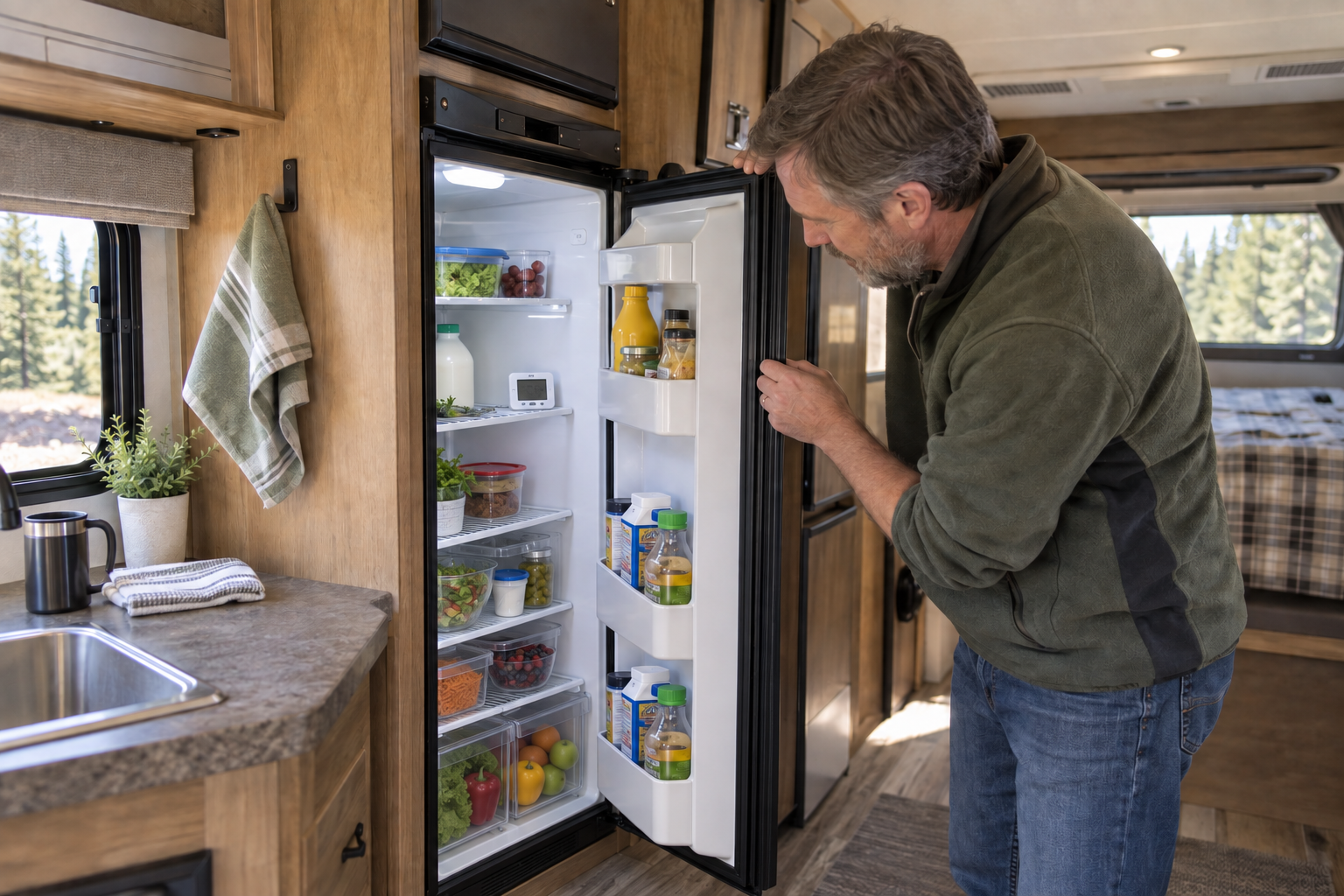
RV refrigerator maintenance matters because the fridge can appear to be running while the food inside slowly warms. Unlike a household fridge, some RV models also depend on propane, 12-volt power, exterior ventilation, and how level the parked RV is. Knowing which type you own makes it much easier to prevent problems—and to recognize one before food spoils.
Identify your refrigerator
Find the manufacturer and model number, then check its manual. Most RV refrigerators fall into two broad groups:
- Absorption refrigerators may operate on propane, 120-volt shore power, or both. Their controls also need 12-volt power on many models. They transfer heat through a sealed cooling system rather than using a conventional compressor.
- Compressor refrigerators use an electrically powered compressor. Depending on the model, they may run on 12-volt DC, 120-volt AC, or a combination of the two.
The maintenance and fault checks are different. Don’t assume a refrigerator has a propane burner just because it came installed in an RV. For more on RV propane system safety, see our RV Propane System and Appliance Safety guide.
Check the temperature, not just the display
A lit control panel tells you that the refrigerator has power; it does not prove that the food compartment is cold enough. Put an appliance thermometer inside and confirm that it stays at 4°C (40°F) or below. The freezer should be at −18°C (0°F) or below if you are storing frozen food.
Start the refrigerator well before loading it for a trip. The time needed to cool varies by model and conditions, so use the thermometer rather than a fixed number of hours. Load food that is already cold, leave space for air to circulate, and avoid holding the door open while deciding what to take out.
If the refrigerator cannot maintain a food-safe temperature, move perishable food to a properly chilled cooler or another refrigerator. Don’t rely on a setting change alone while the food continues to warm. For more on RV appliance care, see our RV Appliance Maintenance guide.
Keep the doors and seals in good condition
Inspect the door gasket for cracks, gaps, and areas that no longer sit flat against the cabinet. Clean the gasket and the surface it contacts. Make sure the door closes securely and its travel latch holds when the RV is moving.
Check the shelves and bins as well. A container pressed against the door can keep it from sealing even when the latch appears closed. Inside, leave the air passages and cooling fins clear rather than covering shelves with paper or packing food tightly against the back wall.
After a trip, remove food, clean spills, and dry the compartment. Follow your model’s storage instructions for leaving the door slightly open; doing so where permitted can help prevent mould and stale odours.
Inspect exterior ventilation
Many absorption refrigerators have exterior access and roof vents that allow heat to escape from behind the appliance. With the refrigerator off and cool, look for leaves, insect nests, or anything blocking those openings. Check again after storage, when animals and insects may have had time to enter.
If you see soot, signs of overheating, damaged wiring, or a propane smell, turn the refrigerator off and arrange service. Don’t adjust the burner, gas valve, or flue yourself. Never puncture, bend, or attempt to open a sealed absorption cooling unit.
A compressor refrigerator may use a different ventilation arrangement. Follow its manual rather than looking for a burner or flue that isn’t there. For more industry safety guidance, see the RV Safety & Education Foundation.
Park an absorption refrigerator within its permitted level range
Absorption refrigerators generally need the parked RV to be reasonably level for proper operation. The manufacturer’s permitted range—not a guess about how level the countertop looks—is what matters. Driving normally changes the refrigerator’s position continually, but a parked RV left out of level can affect cooling and may damage some models.
Compressor refrigerators have different operating limits. Check the manual for your specific unit.
Basic checks when the refrigerator is not cooling
Start with what you can verify safely:
- Check the compartment temperature with a thermometer.
- Confirm the refrigerator is switched on and note any fault code.
- Verify its selected power source is available.
- For a propane-capable model, check the propane supply and whether other propane appliances operate normally.
- Check the RV’s 12-volt supply, even if the absorption refrigerator is set to propane.
- Check the applicable breaker or fuse without repeatedly resetting one that trips.
- Make sure the doors seal and the exterior vents are clear.
- If parked, check that the RV is within the refrigerator’s specified level range.
If it cools on one energy source but not another, record which mode works. If it cools overnight but warms badly during the day, note the outside temperature and whether the vents are in direct sun. Those details help a technician diagnose the fault.
Repeated ignition failure, soot, a burning smell, damaged wiring, or a fault that returns after the basic checks warrants professional service. Don’t bypass a safety device to keep the refrigerator running. For help identifying specific problems, see our Common RV Problems and Troubleshooting guide.
RV Refrigerator Maintenance: Add It to Your Schedule
Before each trip, start the refrigerator, verify its temperature, inspect the door seal, and check that its power source works. During the season, keep the compartment clean and monitor its temperature. After storage, inspect exterior vents before operating an absorption model again.
A refrigerator that cools reliably protects more than your groceries. Checking it before departure is much easier than discovering a problem halfway through a trip. For a printable maintenance schedule, see our RV Maintenance Schedule and Recordkeeping guide.