
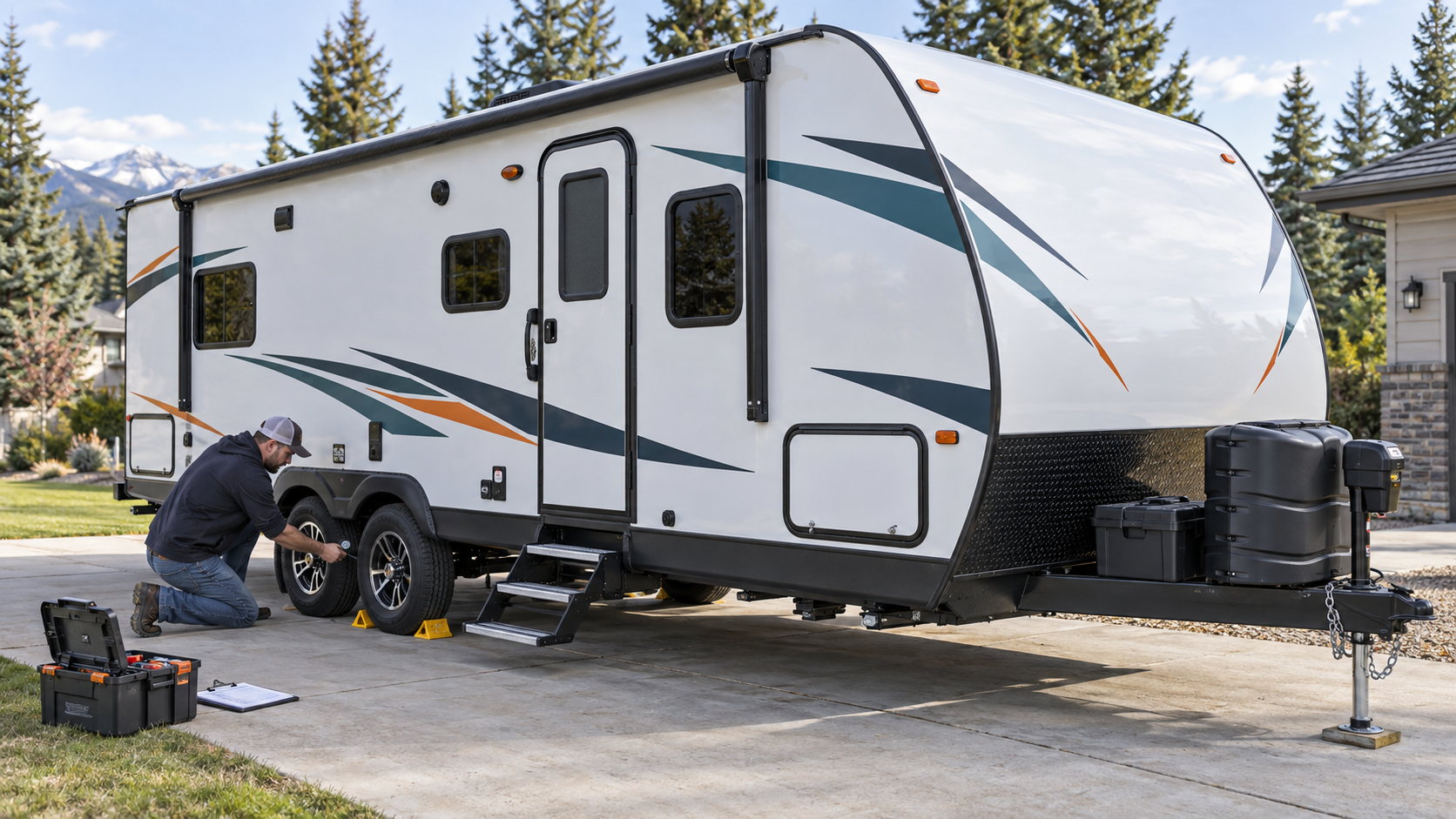
Quick summary: This guide covers essential RV maintenance tips, why preventive care matters, what owners can safely maintain themselves, when to contact a certified technician, and how to document your work.
Owning an RV provides a sense of freedom that few other forms of travel can match. It allows you to explore new places while bringing many of the comforts of home with you. Whether you own a compact travel trailer, a large fifth wheel, a truck camper, or a motorhome, your RV can become the centre of family vacations, weekend escapes, and memorable journeys.
That freedom comes with responsibility. An RV is a complex combination of living space, vehicle components, electrical equipment, plumbing, propane appliances, and structural systems. Unlike a house, it is regularly subjected to highway vibration, changing weather, uneven roads, long storage periods, and significant temperature fluctuations. All of these conditions can cause parts to loosen, seals to deteriorate, and components to wear.
Fortunately, maintaining an RV does not need to be intimidating. Many important maintenance tasks involve little more than careful inspection, basic cleaning, and recognizing when something has changed. The purpose of this guide is to help RV owners understand those responsibilities, establish sensible maintenance routines, and recognize when professional assistance is needed.
Why RV Maintenance Tips Matter for Every Owner
Preventive maintenance is the practice of inspecting and caring for your RV before something fails. It is almost always easier and less expensive to correct a developing problem than to repair the damage caused after it has been ignored.
Many serious RV problems begin with something that appears insignificant. A small crack in a roof seal can allow rainwater to enter a wall. A loose plumbing fitting can slowly damage a cabinet or floor. An underinflated tire can overheat and fail on the highway. Corrosion on a battery terminal can prevent important equipment from operating. A blocked appliance vent can affect performance and create a potential safety concern.
Problems like these may not be immediately noticeable. Water intrusion, for example, can remain hidden inside a wall or beneath the flooring for months. By the time staining, swelling, softness, or mould appears, the damage may already be extensive.
How Preventive Maintenance Prevents Costly Repairs
Regular inspections give you an opportunity to catch these problems earlier. Preventive maintenance can help:
- Reduce unexpected breakdowns
- Prevent costly water damage
- Extend the life of appliances and equipment
- Improve towing and driving safety
- Protect the RV’s resale value
- Support warranty claims
- Make trips more dependable
- Reduce the likelihood of emergency repairs while travelling
Getting to Know Your RV’s Normal Behavior
Preventive maintenance is also about becoming familiar with your RV. Over time, you will learn how its appliances normally sound, how quickly the water pump pressurizes the system, how the slide-outs move, and how the RV feels while being towed or driven.
Once you understand what is normal, you are more likely to notice a change. A new vibration, unusual smell, flickering light, unfamiliar sound, or small water stain may be the first indication that something needs attention.
You do not need to become suspicious of every sound your RV makes. The goal is simply to stay observant and investigate changes before they become larger problems.
How an RV Differs From a House or Passenger Vehicle
An RV may look like a small house inside, but manufacturers do not construct or operate it in quite the same way. It may also travel on public roads, but it is more than an ordinary passenger vehicle.
A house remains on a permanent foundation. Its plumbing, wiring, appliances, cabinets, and structural components are not regularly shaken by potholes, railway crossings, gravel roads, and highway travel. An RV must withstand all of these conditions while remaining as lightweight as possible. Even normal highway travel subjects an RV to repeated vibration, jolts, and movement that a stationary house never experiences.
The need to reduce weight means that RV manufacturers often use lighter materials and compact components. Plumbing lines, fittings, cabinetry, wall panels, and fixtures may be more sensitive to movement or physical damage than comparable household materials.
Multiple Energy Systems in One Vehicle
An RV also contains several different energy systems. Depending on its equipment, it may operate using:
- 12-volt battery power
- 120-volt shore power
- A generator
- Solar power
- Propane
- Gasoline or diesel fuel
These systems sometimes work together. An RV refrigerator, for example, may require 12-volt power for its controls even when it is cooling with propane. A furnace typically burns propane but also relies on 12-volt electricity to operate its fan and control board. A water heater may operate on propane, electricity, or both.
This can make troubleshooting more complicated than it first appears. A propane appliance that stops working may actually have a battery or electrical problem.
RV plumbing is also different from household plumbing. Water can be supplied from an onboard fresh-water tank and pump or through a pressurized campground connection. Wastewater is stored in holding tanks until it can be emptied at an approved dumping station. Because these systems may be exposed to freezing temperatures, they must be properly winterized in colder climates.
The exterior of an RV also requires more frequent inspection than the exterior of most houses or passenger vehicles. Roof vents, skylights, windows, doors, mouldings, marker lights, ladders, and other equipment create openings in the exterior surface. Each opening must be sealed against water. Movement, sunlight, temperature changes, and age can cause those seals to crack or separate.
For these reasons, products intended for household or automotive use are not always suitable for an RV. Household toilet chemicals, plumbing components, sealants, electrical equipment, and cleaning products may damage RV materials or interfere with its systems. Before using any product, confirm that it is compatible with your RV and the material being maintained.
What Owners Can Safely Maintain Themselves
Many basic RV maintenance tasks can be completed by an owner with a few tools, the correct information, and reasonable care.
The exact tasks you can perform will depend on your experience, physical abilities, and comfort level. The RV maintenance tips below focus on tasks most owners can handle safely. A job that is straightforward for one owner may be unsafe for another. You should never feel pressured to perform work that makes you uncomfortable.
Common owner-maintenance tasks may include:
- Checking tire pressure and inspecting tires for visible damage
- Examining exterior seals for cracking or separation
- Cleaning air-conditioner filters
- Cleaning exterior appliance vents
- Inspecting battery terminals for corrosion
- Checking fluid levels in serviceable lead-acid batteries
- Replacing accessible fuses with the correct type and rating
- Testing smoke, propane, and carbon-monoxide alarms
- Replacing detector batteries
- Sanitizing the fresh-water system
- Cleaning the water-pump strainer
- Draining and flushing the water heater
- Inspecting or replacing a water-heater anode rod when applicable
- Cleaning and lubricating designated hinges, locks, and mechanisms
- Cleaning awning fabric
- Inspecting slide-out seals
- Winterizing and de-winterizing the plumbing system
- Checking for moisture beneath sinks, around windows, and inside storage compartments
- Keeping the RV clean, dry, and properly ventilated
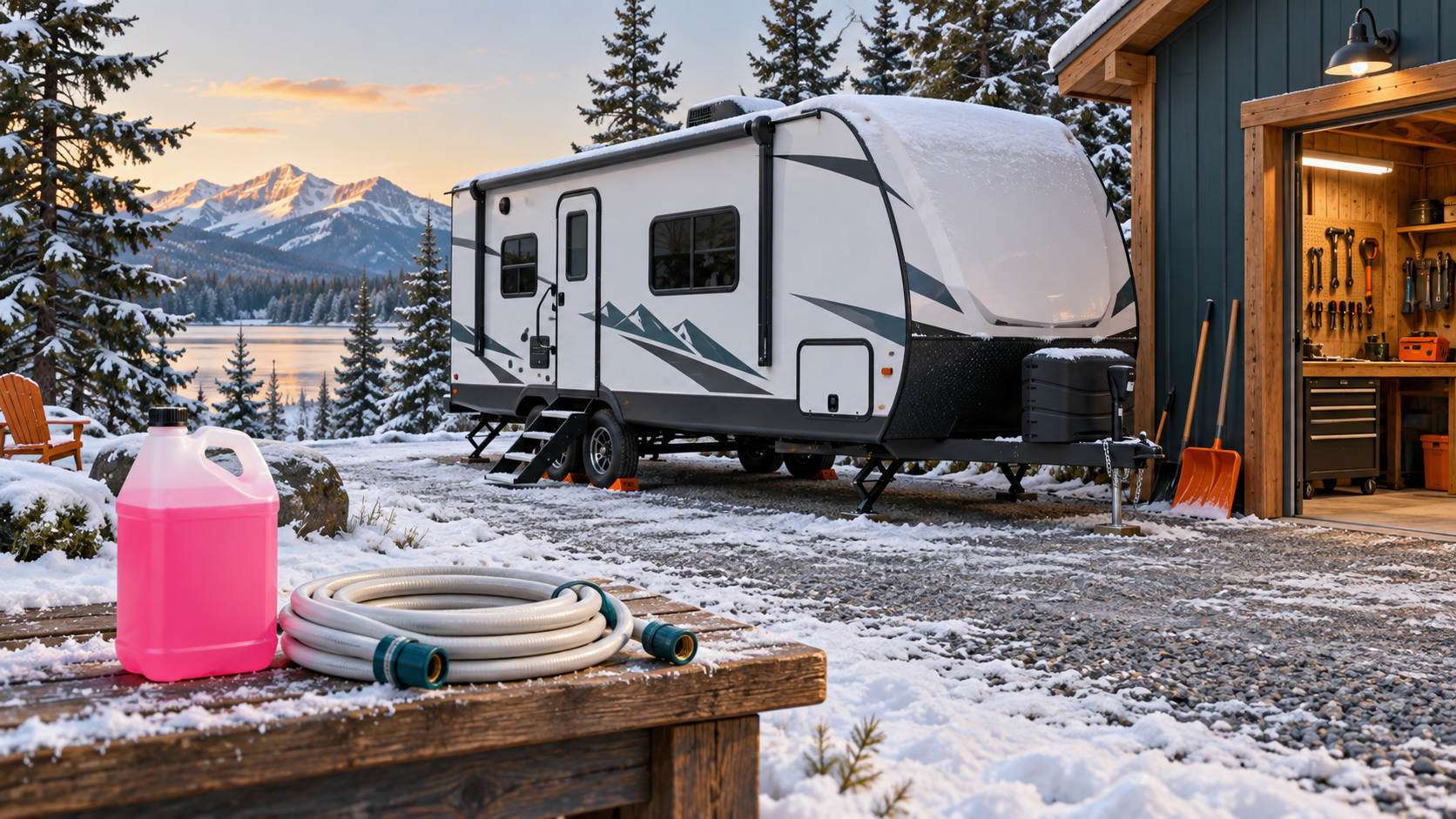
Safety Rules Before You Start Any Task
Before beginning any task, consult the instructions supplied by the RV or component manufacturer. Confirm which energy sources need to be disconnected and whether special procedures, replacement parts, or products are required.
Never rely solely on appearance when choosing a fuse, sealant, electrical component, or replacement part. Two parts may look similar while having very different ratings or material compatibility.
Safe maintenance also requires an appropriate working environment. Make sure the RV is parked securely on firm, level ground. Use wheel chocks where necessary, and never work beneath an RV that is supported only by stabilizers or levelling jacks. If roof access is required, confirm that the roof is designed to support a person and use suitable fall protection and access equipment.
The most important owner-maintenance skill is recognizing your limits. If you do not completely understand the task, stop and seek reliable information or professional assistance.
When to Contact a Certified RV Technician
Some maintenance and repair tasks require specialized knowledge, testing equipment, certifications, or safety procedures. Attempting these repairs without proper training can damage the RV, void a warranty, or place people at risk.
Contact a qualified RV technician or other appropriately licensed professional when dealing with:
- Suspected propane leaks
- Propane regulators, piping, valves, or appliance gas controls
- Electrical overheating, melted wiring, or burned connections
- Persistent circuit-breaker or fuse problems
- Major 120-volt electrical repairs
- Structural damage
- Significant water intrusion
- Soft walls, ceilings, or floors
- Brake, bearing, axle, or suspension concerns
- Cracked wheels or abnormal tire wear
- Slide-outs that are uneven, binding, or repeatedly malfunctioning
- Levelling systems that leak or operate incorrectly
- Refrigeration-system failures
- Appliance combustion problems
- Soot around propane-appliance vents
- Generator problems beyond routine owner maintenance
- Damage involving the hitch, frame, coupler, or pin box
Immediately stop using an affected system if you smell propane, see smoke or sparks, notice an electrical burning smell, or discover dangerously hot wiring. If you suspect a carbon-monoxide problem, move everyone to a safe location and obtain professional assistance. Move everyone to a safe location and obtain professional assistance. For more industry safety guidance, see the RV Safety & Education Foundation.
A technician should also be contacted when a problem continues after basic troubleshooting. Repeatedly replacing a blown fuse, resetting a circuit breaker, or attempting to restart a malfunctioning appliance does not correct the reason it is failing. Safety devices should never be bypassed to keep equipment operating.
Certification requirements and regulated trades vary by location. Propane, electrical, automotive, and structural work may need to be performed by different qualified professionals. Ask the repair facility whether the person performing the work is trained and authorized for that particular system. If you’re dealing with a specific problem, our RV Troubleshooting guides can help you identify the system and decide whether it’s a job for a technician.
Understanding Warranties and Documenting Maintenance
A warranty does not eliminate the owner’s maintenance responsibilities. Manufacturers may require specific inspections or services to be performed at scheduled intervals. A warranty may not cover damage caused by neglect, improper maintenance, unauthorized modifications, freezing, overloading, water intrusion, or the use of incompatible products.
Component Warranties vs. RV Manufacturer Warranties
An RV can also have several different warranties. The RV manufacturer may cover the main structure, while individual component manufacturers provide separate coverage for appliances and equipment such as:
- Refrigerators
- Furnaces
- Water heaters
- Air conditioners
- Awnings
- Axles
- Levelling systems
- Generators
- Batteries
- Solar equipment
- Slide-out mechanisms
Read the warranty information supplied with both the RV and its major components. Record the beginning and expiration dates of each warranty and note any required inspections or maintenance intervals.
Whenever possible, create a maintenance file containing:
- The RV’s year, make, model, and vehicle identification number
- Appliance and component model numbers
- Appliance and component serial numbers
- Owner’s manuals
- Warranty documents
- Purchase records
- Parts receipts
- Repair orders
- Inspection reports
- Photographs of completed maintenance
- Dates and descriptions of work performed
- Mileage or travel distance at the time of service
- The name of the person or business that performed the work
If you discover a possible warranty concern, document it promptly. Take clear photographs or videos and record the date when the problem was first noticed. Contact the manufacturer or dealer before making major repairs unless immediate action is necessary to prevent further damage or protect personal safety.
Good records do not guarantee that a claim will be approved, but they can show that the RV has been responsibly maintained. They can also help technicians understand its repair history and may increase buyer confidence if the RV is later sold.
Essential Tools and Supplies for an RV Owner
You do not need a large workshop to perform basic RV maintenance. A carefully selected tool kit can handle many inspections, adjustments, and minor repairs.
A basic RV tool kit may include:
- A quality tire-pressure gauge
- A portable tire inflator or air compressor
- A torque wrench with the correct sockets
- A digital multimeter
- A non-contact voltage tester
- A selection of screwdrivers
- A socket-and-ratchet set
- Combination wrenches
- Adjustable pliers
- Needle-nose pliers
- Wire cutters
- A utility knife
- A flashlight or headlamp
- A tape measure
- A small inspection mirror
- Work gloves
- Safety glasses
- A properly rated fire extinguisher
- Wheel chocks
- Levelling blocks
- An electrical outlet tester
- Spare fuses of the correct types and ratings
- Spare light bulbs where applicable
- Replacement batteries for safety detectors
Useful RV supplies may include:
- Drinking-water-safe hoses
- A water-pressure regulator
- A water filter
- A sewer hose with secure fittings
- Disposable gloves for handling wastewater equipment
- RV-safe toilet paper
- Holding-tank treatment
- RV plumbing antifreeze
- Manufacturer-approved lubricants
- Appropriate roof and exterior sealants
- Battery-terminal cleaner and protectant
- Cleaning products approved for RV surfaces
- Microfibre cloths and soft cleaning brushes
- Spare hose washers and plumbing fittings
- Electrical adapters approved for the intended use
- A surge protector or electrical-management system
The exact items you need will depend on your RV. Before buying specialized products, determine which roof material, plumbing fittings, batteries, appliances, electrical service, and sealants your RV uses.
Keep tools and supplies organized so you can find them quickly. Store heavy items low and secure them before travelling. Propane cylinders, fuel, chemicals, and flammable products must be transported and stored according to their labels and applicable safety requirements.
A tool kit is only valuable when the person using it understands the task. Carrying a multimeter does not make live electrical testing safe, and owning a torque wrench does not replace the manufacturer’s specifications. Learn how to use each tool correctly before relying on it.
Building a Consistent RV Maintenance Routine
Good RV maintenance maintenance is built on consistency rather than expertise. You do not need to understand every system immediately, and you do not need to perform every repair yourself.
Start by learning where the important components are located. Find the electrical panel, battery disconnect, propane shutoff, water pump, low-point drains, water-heater bypass valves, safety detectors, fire extinguisher, and emergency exits. Record the identifying information for the RV and its major appliances. Assemble a basic tool kit and begin a maintenance log.
Most importantly, develop the habit of paying attention. The best RV maintenance tips are useless if you don’t actually look at your RV regularly. A few minutes spent inspecting your RV before a trip, at the campsite, and after returning home can prevent many common problems.
The chapters ahead will explain each major system, identify routine maintenance tasks, and help you recognize warning signs. For a printable reference you can keep in your RV, see our RV Checklists page. With regular care, appropriate tools, and a willingness to seek professional help when necessary, you can protect your RV, reduce unexpected repairs, and travel with greater confidence.