
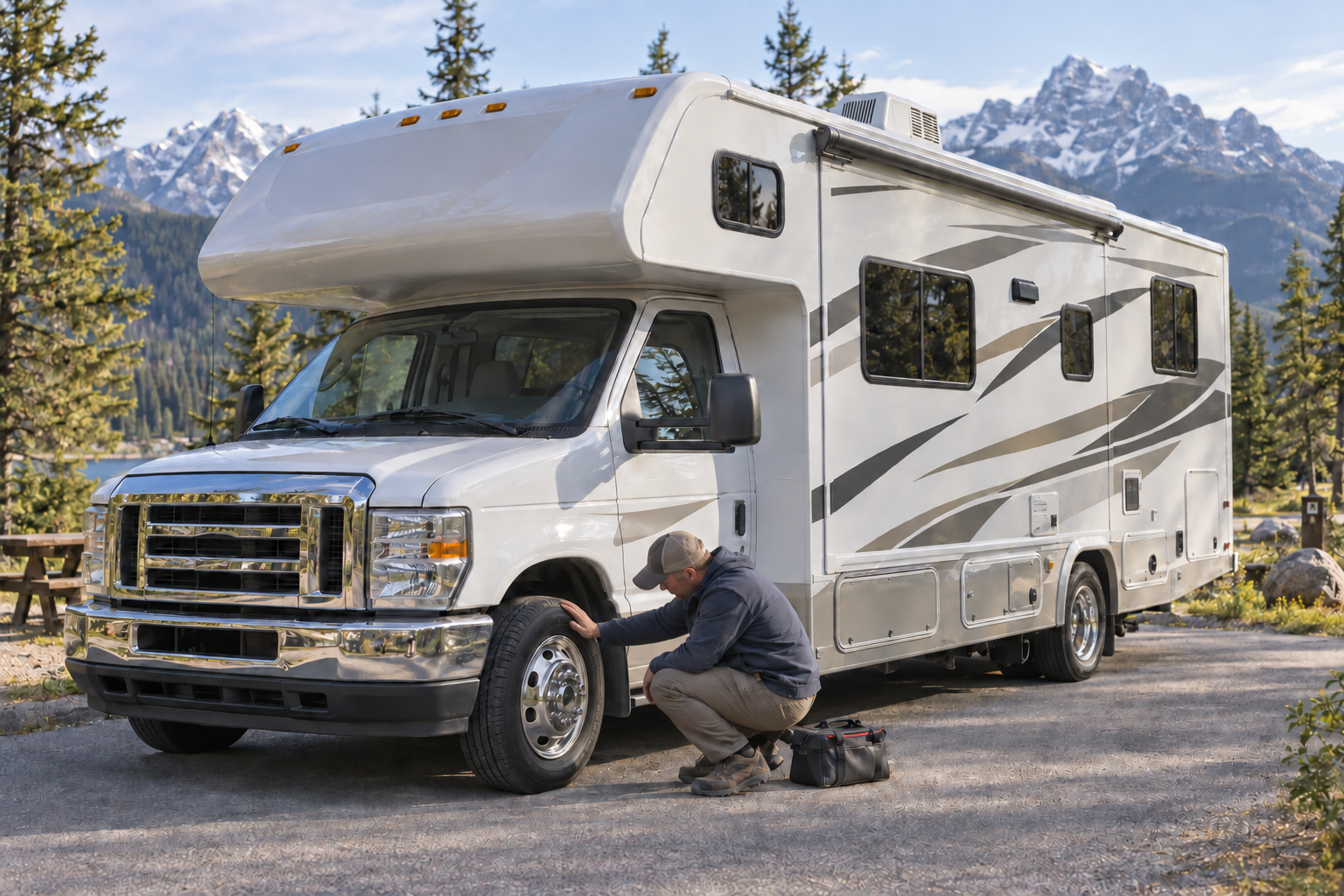
Motorhome maintenance covers both a vehicle and a living space. Keeping the refrigerator, plumbing, and roof in good condition will not help if its tires, brakes, engine, or cooling system fail on the highway. Likewise, a sound chassis cannot prevent damage from an unnoticed roof leak or frozen water line. A useful maintenance plan covers both halves.
Motorhomes are not all built alike. A Class A diesel pusher, gas-powered Class A, Class B van, and Class C have different engines, chassis, brake systems, suspension components, and service intervals. Start by identifying the motorhome builder, chassis manufacturer, engine, transmission, generator, tire specifications, and major RV appliances. Keep their manuals and model numbers together; the chassis and RV body may have separate maintenance schedules.
Begin With the Manuals and a Service Record
Use the chassis manufacturer’s schedule for engine oil, filters, coolant, transmission, brakes, steering, suspension, and other vehicle components. Use the RV builder’s and appliance manufacturers’ manuals for the roof, water system, propane, generator, air conditioner, furnace, and other living-area equipment. Calendar time can matter even when mileage stays low. Do not assume a motorhome that was parked all season needs no service.
Record dates, mileage, generator hours, work completed, parts used, and the next due service. Keep receipts and note repeat problems. If you purchased a used motorhome without reliable service records, have a qualified shop establish a baseline rather than guessing which fluids and filters were last changed.
Check Tires Before Every Trip
Inspect each tire for damage, cracking, bulges, irregular wear, and embedded objects. Check pressure when the tires are cold using the pressures appropriate for the actual axle loads and the tire and vehicle manufacturers’ guidance. Do not use the maximum pressure printed on the sidewall as a universal operating target. Tire age and storage exposure matter as well as tread depth.
Weigh the fully loaded motorhome, preferably obtaining individual wheel-position weights if a suitable service is available. Compare measured loads with the chassis axle ratings and tire load capacities. Do not forget the effect of full water tanks, passengers, cargo, and any load imposed by a trailer’s tongue. Inspect the spare if equipped and follow the wheel manufacturer’s lug-nut torque and recheck instructions. For a complete tire guide, see our RV Tire Safety post.
Inspect Brakes, Steering, and Suspension
Before driving, make sure the service brakes respond evenly and the parking brake holds as designed. Watch for pulling, vibration, unusual noise, a soft pedal, air-pressure warnings, or unusually hot wheels. On an air-brake motorhome, follow the chassis manual for the correct air-system checks, warning thresholds, and moisture-management procedures. Never treat a warning light or low-air condition as something to drive through.
Check for fluid leaks under the motorhome and inspect visible steering and suspension parts for damage or looseness. Examine shock absorbers, springs or air bags, and accessible bushings. A change in ride height, wandering steering, uneven tire wear, or new clunks merits professional inspection. Brake adjustment, wheel-end service, air-system repair, and structural suspension work should be performed to the chassis manufacturer’s specifications.
Maintain the Engine and Cooling System
Check engine oil, coolant, and other accessible fluids according to the owner’s manual. Investigate a falling fluid level rather than repeatedly topping it up. Look for leaks, worn belts, damaged hoses, blocked airflow, and signs of overheating. Replace oil, coolant, filters, and other consumables at the prescribed time or mileage, using approved specifications for your engine and chassis.
Gasoline and diesel powertrains have different service needs. Diesel engines may also have fuel-water separation, diesel exhaust fluid, or emissions-system requirements. Do not assume one diesel chassis uses the same coolant, filter, or service interval as another. Address warning lights and reduced-power messages promptly.
Pay Attention to the Transmission and Driveline
Follow the chassis schedule for transmission service, differential or axle fluids, and any lubricated driveline components. Notice harsh shifts, vibration under acceleration, or new noise and have them evaluated before a long trip. Do not crawl under an unsupported motorhome or improvise a lifting point: its weight makes mistakes especially dangerous.
Exercise and Service the Generator
If equipped, run the generator under an appropriate load at the interval specified by its manufacturer. Check oil, air filtration, cooling airflow, exhaust condition, and the hour-based service schedule. A generator that starts but repeatedly stops or runs poorly may need professional diagnosis. Never run it in an enclosed space or where exhaust can enter the motorhome through windows, vents, or neighbouring campsites. Test carbon-monoxide alarms and keep their replacement dates on your maintenance calendar. For generator-specific care, see our RV Generator Maintenance and Troubleshooting guide.
Inspect the Roof and Exterior Seals
Inspect roof seams, vents, skylights, air-conditioner mounts, windows, clearance lights, and exterior penetrations for failed sealant or water entry. Use sealant compatible with the roof and component materials; applying a random product over a dirty or damaged seam can hide the problem. Only go onto the roof if the manufacturer permits it and you can do so safely.
Look inside cabinets, around windows, beneath mattresses, and near plumbing for stains, soft material, or a musty smell. Water intrusion can spread far from its entry point. Investigate leaks early rather than waiting for visible interior damage. For detailed roof and seal inspection, see our RV Roof and Exterior Seal Inspection guide.
Maintain Water, Waste, and Propane Systems
Inspect the freshwater fill, hoses, pump, fixtures, water heater, and visible fittings for leaks. Sanitize the freshwater system and maintain filters according to the RV and component manufacturers’ instructions. Monitor the wastewater tanks for leakage, damaged valves, and hose deterioration. Winterize plumbing before freezing weather and de-winterize carefully before using it again.
Inspect propane cylinders or tanks, visible lines, and appliance vents. Keep ventilation openings clear. If you smell propane, turn off the supply when safe, avoid switches and ignition sources, leave the area, and obtain qualified service. Have propane leaks and combustion-system problems diagnosed by a qualified technician; do not use an appliance that repeatedly fails to ignite or vents exhaust into the interior.
Check Electrical and Climate-Control Equipment
Inspect the shore-power cord and connectors for heat damage, corrosion, broken insulation, or loose contacts. Test GFCI protection as directed, and confirm that the house batteries are secured and maintained for their chemistry. Identify whether the chassis battery and house batteries charge independently or through a combining system. A motorhome may have multiple charging sources, including shore power, alternator, solar, and generator; understand which system powers each circuit.
Clean accessible air-conditioner filters, verify return and supply airflow, and examine exterior vents for blockage. Maintain the furnace and ventilation system according to their manuals. Leave internal high-voltage, refrigerant, and combustion repairs to qualified service.
Inspect Body-Specific Equipment
Check entry steps, exterior compartments, mirrors, windscreen wipers, washer fluid, lights, and slide-outs before travel. Some motorhomes also have hydraulic levelling jacks, air-levelling systems, or power steps. Retract and verify these systems according to their manuals; do not move the motorhome with a jack, step, or slide-out deployed. Confirm that dash warning indicators and rear or side cameras work, but still use a full walk-around.
Motorhome Maintenance: A Practical Rhythm
Before every drive: Check tires, fluid leaks, lights, mirrors, wipers, steps, slides, jacks, compartments, and the braking system. Test essential alarms and secure loose items inside.
During a trip: Walk around at stops. Watch tire condition, unusual wheel heat, new leaks, fluid warnings, generator operation, and changes in handling.
At scheduled service intervals: Follow the chassis, engine, generator, and appliance manuals for fluids, filters, inspections, and time-based work. Review roof and seal condition regularly, especially after severe weather or storage.
Before and after storage: Maintain batteries, tires, fuel, plumbing, and generator as specified; check for pests, water intrusion, and damage before returning to service.
When to Seek Professional Service
Do not drive with brake, steering, tire, overheating, fuel-leak, or low-air-pressure problems. Call a qualified chassis technician for those faults. Arrange RV service for structural roof leaks, electrical faults, propane leaks, and internal appliance or generator repairs. If the motorhome also tows a vehicle, inspect its receiver and towing equipment.
The most effective motorhome maintenance plan is not a universal checklist of replacement dates. It is a schedule built from the exact chassis and equipment you own, backed by regular walk-arounds and a record of what actually happened between trips. For help identifying specific problems, see our RV Troubleshooting guides. For more industry safety guidance, see the RV Safety & Education Foundation.