
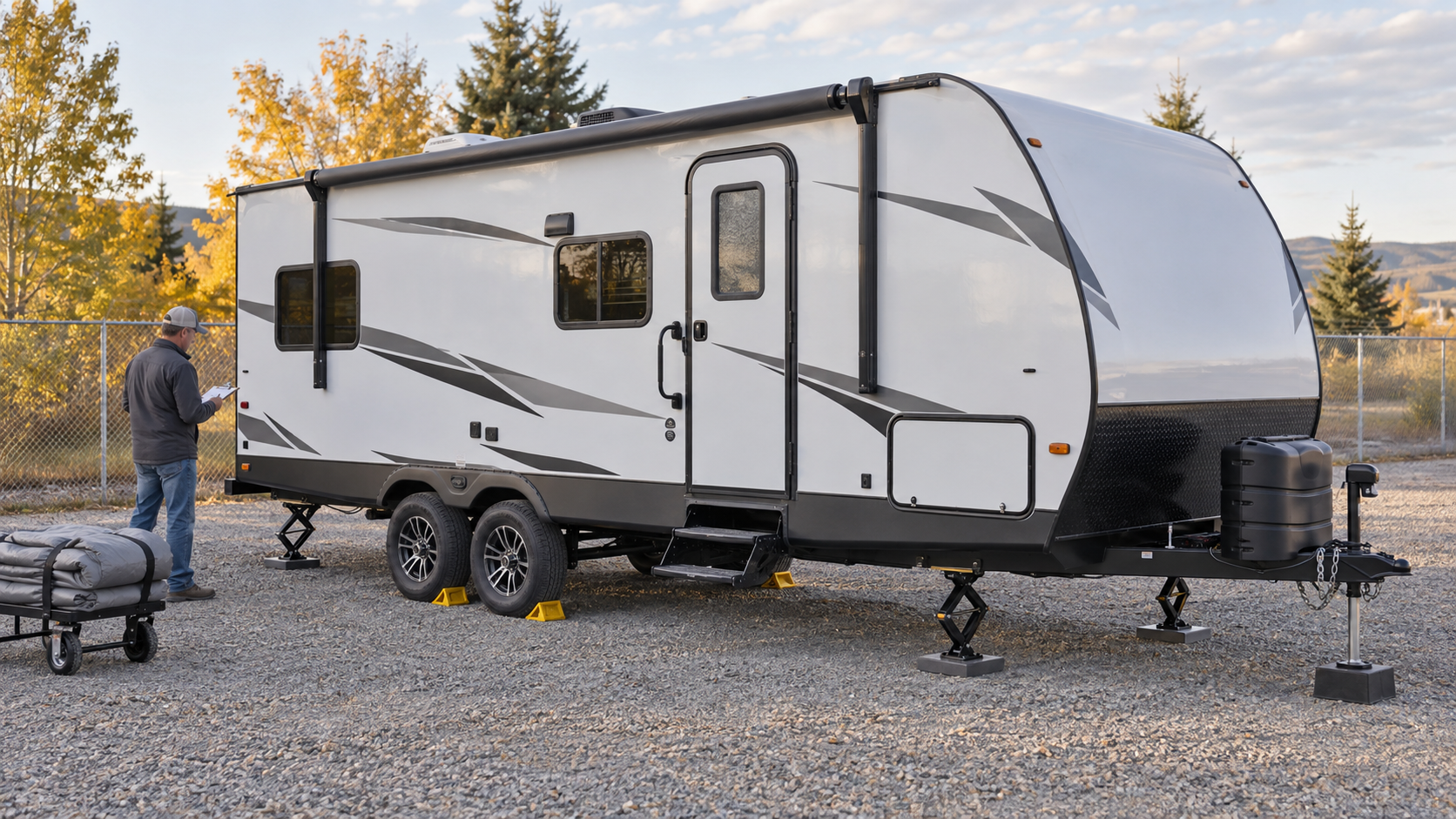
Knowing how to store an RV involves more than parking it and locking the door. Whether the RV will sit unused for several weeks or remain in storage throughout the winter, careful preparation can help prevent battery damage, tire deterioration, moisture problems, pest intrusion, unpleasant odours, and costly water damage.
The correct storage procedure depends on the RV, local climate, storage location, and length of time it will remain unused. Always follow the instructions provided by the RV, appliance, battery, tire, generator, and chassis manufacturers.
Short-Term and Long-Term RV Storage
Short-term storage generally refers to periods between trips during the camping season. The RV may only remain parked for several days or weeks, but it should still be cleaned, secured, and inspected before being left unattended.
Long-term storage may last several months or an entire season. It requires more preparation because batteries can discharge, fuel can deteriorate, tires can develop problems, pests can enter, and unnoticed leaks may cause extensive damage.
Climate also affects storage requirements. An RV stored through sustained freezing temperatures requires freeze protection, while one stored in a warm, humid climate may need greater attention to ventilation, mould prevention, sun exposure, and insects.
Choose a Suitable Storage Location
Whenever possible, store the RV on firm, level, well-drained ground. Avoid areas where water collects beneath the unit or where branches, tall grass, snow accumulation, falling debris, or nearby equipment could damage it.
Before using a commercial storage facility, consider:
- Site security and access hours
- Drainage and ground conditions
- Indoor, covered, or outdoor storage options
- Availability of electrical power
- Rules concerning propane and batteries
- Snow-removal practices
- Insurance requirements
- Space around the RV for inspections
- Restrictions on maintenance or washing
- Protection from nearby traffic or equipment
Confirm that the storage location can accommodate the RV’s total length, width, and height. Include the hitch, ladder, spare tire, air conditioner, antennas, and other projections when checking clearance.
Clean the RV Before Storage
Food residue, grease, crumbs, and garbage attract insects and rodents. Before storing the RV:
- Remove all food, beverages, garbage, and pet supplies
- Clean the refrigerator and freezer
- Wipe counters, cabinets, drawers, and appliances
- Vacuum or sweep the floors
- Clean beneath furniture and inside storage compartments
- Wash and dry dishes, cookware, and utensils
- Remove damp towels, bedding, and clothing
- Empty and clean garbage containers
- Clean the bathroom and toilet
- Empty and rinse the holding tanks
Leave the refrigerator and freezer doors slightly open after they have been cleaned and dried. Use the manufacturer’s door-storage position or a suitable spacer that will not damage the seals.
Never leave perishable food inside the RV, even during short-term storage.
Inspect the Exterior for Water Entry
A small exterior opening can allow significant water damage to develop while an RV is unattended. Inspect the roof and exterior before storage, paying particular attention to:
- Roof seams and edges
- Vents and vent covers
- Skylights
- Antennas and roof-mounted equipment
- Windows and doors
- Exterior mouldings
- Marker lights
- Access doors
- Slide-out openings
- Corner trim
- Utility connections
- Sealant around exterior penetrations
Look for cracked, loose, missing, or separated sealant. Use only sealants approved for the RV’s roof and exterior materials. Applying an incompatible product can damage surfaces and make future repairs more difficult.
If you find staining, soft material, swelling, delamination, or an active leak, have the problem evaluated before placing the RV in long-term storage.
Retract Slide-Outs and Awnings
Unless the manufacturer specifically recommends otherwise, retract slide-outs during storage. A retracted slide-out reduces exposure of the roof, seals, sidewalls, and operating mechanism.
Before retracting a slide-out:
- Remove debris and standing water from the roof
- Inspect the seals
- Make sure nothing obstructs the interior or exterior
- Confirm that loose objects cannot interfere with movement
- Follow the manufacturer’s operating procedure
Clean and completely dry awning fabric before rolling it up. Storing a damp awning can encourage staining, mildew, and odours. Secure all awnings in their travel positions.
Prepare the Plumbing System
For short-term warm-weather storage, disconnect the city-water hose, turn off the water pump, relieve system pressure, and check the RV for leaks.
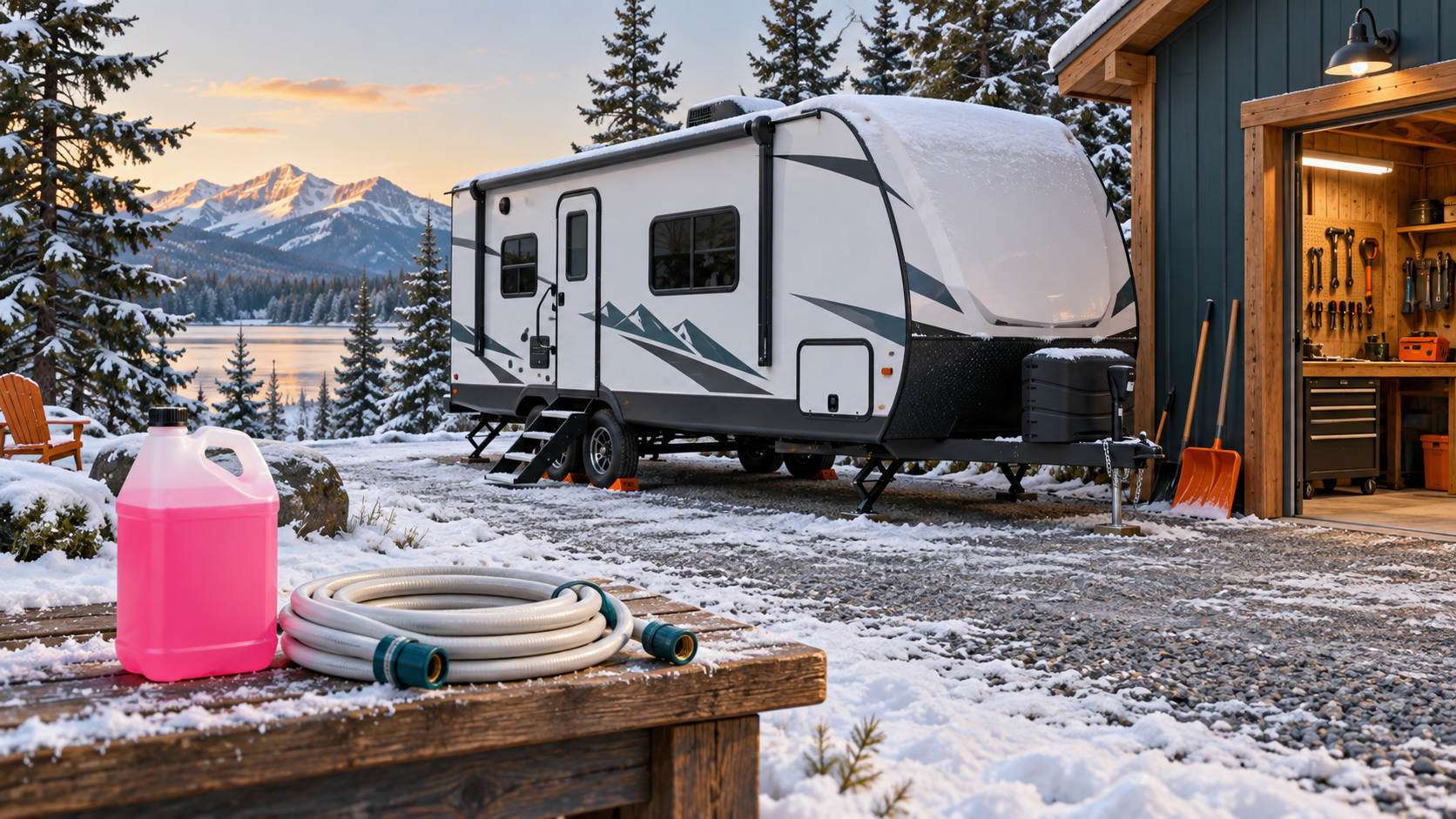
If freezing temperatures are possible, the plumbing system must be properly winterized. This may include:
- Draining the fresh-water tank
- Emptying and rinsing the holding tanks
- Draining the water heater
- Bypassing the water heater
- Draining low-point lines
- Protecting traps and plumbing fixtures
- Pumping RV plumbing antifreeze through the system when required
Never use automotive antifreeze in an RV fresh-water system. Use only nontoxic antifreeze labelled for RV or potable-water plumbing.
Follow the RV and water-heater manufacturers’ instructions. Water-heater procedures vary, and the tank must never be energized while empty.
For detailed cold-weather instructions, refer to the RV winterizing guide.
Manage the Batteries
Parasitic electrical loads can slowly discharge an RV battery even when most equipment is turned off. Detectors, control boards, clocks, entertainment equipment, inverters, and other devices may continue drawing power.
Depending on the battery type and manufacturer’s instructions, long-term storage may involve:
- Fully charging the battery
- Turning off the battery disconnect
- Disconnecting the negative battery cable
- Removing the battery for storage
- Connecting an approved maintenance charger
- Checking the state of charge periodically
- Checking electrolyte levels in serviceable flooded lead-acid batteries
Store removable batteries in a dry, ventilated location protected from damage and extreme temperatures. Do not place tools or metal objects across battery terminals.
Lithium and lead-acid batteries have different storage requirements. Follow the battery manufacturer’s instructions for charge level, temperature, disconnection, and maintenance.
If the RV remains connected to shore power, confirm that its charging system is suitable for unattended long-term use. A malfunctioning or inappropriate charger can damage a battery. For a complete battery guide, see our RV Battery Maintenance post.
Protect the Tires
Tires can deteriorate from age, sunlight, improper inflation, moisture, overloading, and long periods of inactivity.
Before storage:
- Check tire pressure when the tires are cold
- Inflate them according to the RV or tire manufacturer’s instructions
- Inspect for cracking, cuts, bulges, punctures, and abnormal wear
- Check the tire date codes
- Remove stones and debris lodged in the tread
- Park on a firm, stable surface
- Use tire covers when appropriate
Avoid parking tires in standing water, soft soil, or prolonged contact with petroleum-based materials. If boards or pads are used beneath the tires, they should be wide enough to support the entire tread and strong enough for the load.
Do not lift the RV or unload its tires unless the manufacturer provides an approved procedure. Stabilizing jacks are not normally designed to lift or support the RV’s full weight. For a complete tire guide, see our RV Tire Safety post.
Stabilize and Secure the RV
Park the RV securely and use wheel chocks where appropriate. Stabilizers may be deployed according to the manufacturer’s instructions to reduce movement, but they should not be used as lifting jacks.
For a travel trailer:
- Chock the wheels
- Lower the tongue jack onto a suitable pad
- Secure the coupler
- Remove or lock hitch components as appropriate
- Deploy stabilizers only as instructed
For a fifth wheel, follow the manufacturer’s instructions for landing gear, stabilizers, wheel chocks, and pin-box security.
Do not leave loose levelling blocks, tools, hoses, or other equipment around the RV where they could be damaged, stolen, or become a tripping hazard.
Prevent Rodents and Insects
Rodents can damage wiring, insulation, fabrics, ductwork, and stored belongings. Inspect the RV for openings around:
- Plumbing lines
- Wiring
- Propane lines
- Wheel wells
- Storage compartments
- Exterior access panels
- Floor and wall penetrations
Seal appropriate openings with materials suitable for the RV and the area being protected. Do not block appliance vents, drainage openings, combustion-air passages, or required ventilation.
Remove nesting materials, food, paper products, and other attractants. Check local regulations and product labels before using traps or pest-control products, especially where children or pets may be present.
Inspect the RV periodically. Evidence such as droppings, nesting material, damaged insulation, or chewed wiring should be addressed promptly.
Control Moisture and Ventilation
Moisture can lead to condensation, musty odours, mould, corrosion, and damage to interior materials. Clean and dry the RV thoroughly before closing it.
Depending on the climate and storage arrangement, moisture control may include:
- Using moisture-absorbing products
- Operating an appropriate dehumidifier where power and drainage are available
- Leaving interior cabinet and closet doors open
- Raising mattresses or cushions to improve airflow
- Using vent covers that allow approved ventilation
- Checking regularly for condensation or leaks
Do not leave windows or roof vents open unless they are protected from rain, snow, pests, and wind-driven debris. Follow the RV manufacturer’s recommendations for storage ventilation.
Store Propane Safely
Turn off propane cylinders or tanks before storage unless the manufacturer or storage facility requires another procedure. Make sure valves are closed and protective covers are secure.
Never store portable propane cylinders inside the RV. Cylinders must remain upright, protected from damage, and stored or transported according to their labels and applicable regulations.
If you smell propane or suspect a leak, do not operate switches, appliances, flames, or ignition sources. Leave the area and have the propane system inspected by a qualified professional. For propane appliance safety, see our RV Propane System and Appliance Safety guide.
Prepare a Motorhome or Generator
Motorhomes require attention to both the living systems and the vehicle chassis. Follow the chassis manufacturer’s storage instructions for:
- Engine oil and fluids
- Fuel quality and stabilization
- Chassis battery care
- Coolant protection
- Tire pressure
- Parking-brake use
- Transmission
- Scheduled engine operation
Generators also have model-specific storage requirements. These may include fuel treatment, oil service, battery maintenance, and periodic operation under load. Follow the generator manufacturer’s instructions rather than starting it briefly without a load.
Ensure the exhaust outlet remains unobstructed, and never operate an engine or generator inside an enclosed storage building without approved ventilation and permission.
Decide Whether to Use an RV Cover
A properly fitted, breathable RV cover can protect exterior surfaces from sunlight, dirt, leaves, and weather. However, a poor-fitting cover may flap in the wind, trap moisture, damage finishes, or wear against corners and roof-mounted equipment.
If using a cover:
- Choose one designed for the RV’s type and size
- Clean and dry the RV first
- Pad sharp corners where recommended
- Secure the cover according to its instructions
- Do not block required vents
- Inspect it periodically for movement or damage
Do not use an ordinary plastic tarp as a substitute unless the RV manufacturer recommends it. Tarps can trap moisture and abrade exterior surfaces.
Remove or Secure Valuable Items
Remove valuables, documents, electronics, medications, keys, personal information, and items that may be damaged by temperature changes.
Close and lock windows, doors, storage compartments, and exterior access panels. Consider using approved hitch, coupler, wheel, or steering-wheel locks where appropriate.
Photograph the RV’s condition and contents before long-term storage. Keep insurance, registration, serial numbers, and storage-facility information in a secure location outside the RV.
Inspect the RV During Storage
Long-term storage should not mean abandoning the RV until spring. Inspect it periodically and after severe weather.
During each visit, check for:
- Roof or exterior damage
- Water stains, dampness, or musty odours
- Pest activity
- Battery condition
- Tire pressure and visible damage
- Shifted covers or protective materials
- Snow, ice, or debris accumulation
- Signs of vandalism or forced entry
- Propane odours
- Leaks beneath the RV
- Changes in the RV’s position or supports
Do not allow heavy snow or ice to accumulate beyond the RV manufacturer’s limits. Roof access in winter can be extremely hazardous, so use a qualified service provider when necessary.
How to Store an RV: Returning It to Service
When removing the RV from storage, inspect it carefully before travelling or operating its systems.
A return-to-service inspection should include:
- Removing covers and pest barriers
- Inspecting the roof and exterior seals
- Checking tires and adjusting pressure
- Inspecting wheels, brakes, suspension, and running gear
- Reconnecting and testing the batteries
- Checking safety detectors and the fire extinguisher
- Inspecting the propane system
- Restoring and sanitizing the fresh-water system
- Testing appliances
- Checking lights and electrical systems
- Inspecting for leaks
- Checking the hitch and towing equipment
- Testing the generator and chassis systems where applicable
If the RV was winterized, complete the full de-winterizing procedure before using the plumbing system or water heater.
RV Storage Checklist
Before leaving the RV in storage:
- Remove food, garbage, valuables, and damp materials
- Clean and dry the interior
- Empty and clean the refrigerator
- Empty and rinse the holding tanks
- Protect the plumbing system from freezing
- Inspect the roof and exterior seals
- Retract slide-outs and awnings
- Check and protect the tires
- Charge and manage the batteries
- Shut off propane
- Secure doors, windows, and compartments
- Remove pest attractants
- Provide suitable moisture control
- Follow motorhome and generator storage procedures
- Photograph the RV’s condition
- Schedule periodic inspections
When to Seek Professional Assistance
Contact a qualified RV technician or other appropriate professional if you discover:
- Significant water intrusion
- Soft walls, ceilings, or floors
- Damaged electrical wiring
- Evidence that rodents have chewed wiring or propane lines
- A suspected propane leak
- Structural damage
- Cracked wheels or serious tire damage
- Brake, axle, bearing, or suspension concerns
- Battery overheating or severe corrosion
- Generator or chassis problems beyond routine maintenance
Careful storage preparation protects more than the RV’s appearance. It helps preserve the plumbing, electrical systems, batteries, tires, appliances, furnishings, and structure so the RV is safer and easier to return to service when the next trip arrives. For more industry safety guidance, see the RV Safety & Education Foundation.